
Basketball plays and strategy
3-2 zone defense in basketball: coverage and trade-offs
A 3-2 zone starts three defenders high and two nearer the basket. Its difficult decision comes when the ball reaches a corner: someone must meet it while teammates cover the interior space that opens.
Use a 3-2 zone only where the competition permits it. In the authored rotation below, a high outside defender meets a wing, a low defender can meet a corner and the other players narrow to cover the basket and return windows. A corner pass and a shot are separate tests of the system. No alignment guarantees stops or removes the need to learn player-to-player skills.
Under the NBA/USA Basketball recommendations, ages 7–8 and ages 9–11 use player-to-player set defense. Check that boundary before choosing a zone rotation.
On this page
Check age and league restrictions
For an older group, ask the competition which zones and pressure tactics are permitted. A formation name cannot settle those local restrictions.
Where a zone is permitted, consider what the group can already see. Check whether a defender can move to the ball without losing every receiver. Ask which teammate meets the next pass. If those actions are new, begin with a two-player handoff task instead of five moving positions.
Age alone does not answer readiness. A group familiar with a diagram can still miss the cutter behind it. Have every player practice the low and high jobs, rather than assign the low pair permanently by height. Each job needs awareness and a useful next choice.
Use no-contact walking demonstrations first. This lets the adult place the ball and pause the receiving window before players try to compete. If the lesson needs a tackle, grab or push to make the rotation work, the task needs to be redesigned.
Starting alignment
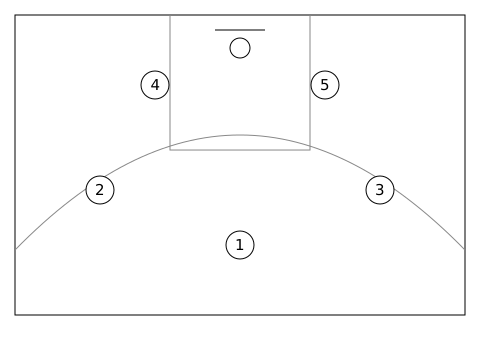
The high middle defender sees the top ball area and the space behind the outside pair. The outside high defenders begin with the wing windows. The low pair see the basket area and the low receivers. These jobs can overlap during movement, which is why an adult needs a clear handoff rule.
Avoid calling every triangle with three high players a 3-2 without explaining its actual jobs. Some coaches use related alignments with different high-point or wing responsibilities. The label is less useful than stating who meets a pass and who protects the space they leave.
| Starting job | First observation | Risk if the player looks only at the ball |
|---|---|---|
| 1, high middle | Top and interior receiver | A cutter can pass behind |
| 2 and 3, high outside | Wing window and next pass | Corner receiver can be missed |
| 4 and 5, low pair | Basket and low receiver | A weak-side player can go unseen |
Scroll for more →
Wing and corner coverage
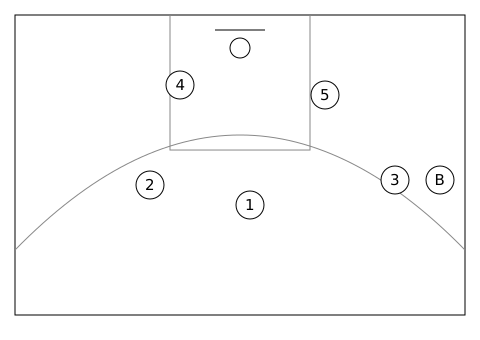
Begin with the ball at the top. Let the passer send it to the right wing. Player 3 meets the catch under control, 1 narrows toward the middle and 2 sees the next reversal. The low pair stay aware of the basket and any low receiver rather than chase the ball outside together.
For the corner pass in this example, 5 moves out toward the ball. Player 4 shifts toward the basket from the weak side. Player 1 drops into the open inside window, while 3 covers the nearby return pass and 2 narrows enough to see the weak-side option. This is one authored rotation to discuss, not a claim that all 3-2 systems use it.
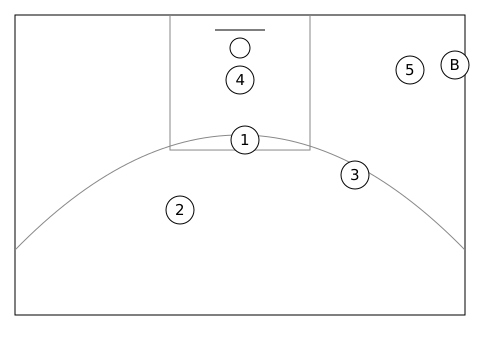
Freeze the corner frame. Ask the low defender who is no longer beside the basket. Ask the high middle player which receiver is now behind or beside them. The lesson is about the space left by a movement. Don't judge the rotation only by whether the corner player happened to miss a shot.
A ball reversal requires another handoff. Walk the ball back to the wing, then to the top, allowing each defender to restore a connected position. Once the players understand that reset, let the passer choose the return timing. A late recovery should reveal the gap rather than be hidden by an adult stopping every pass.
Help and rebounding
The low pair have fewer starting bodies near the basket than the low line of a 2-3. They still need help when a cutter or pass enters that area. Decide which high player drops for the exact teaching sequence. Don't leave the instruction at “everyone helps,” because five players moving inward can leave every outside receiver free.
Use a no-shot pass into the interior for the first lesson. A receiver catches at a clear spot and the nearest defender moves to contain, while others keep sight of their next windows. Stop before contact. The adult can ask which pass became available after the help moved.
When a shot goes up, the defenders must identify nearby opponents rather than watch the rim from their zone spots. Begin with a gentle tossed ball and no contest for space. Each player can point to the opponent they would need to find before anyone moves toward the rebound.
Then let the group collect one controlled rebound and make an outlet pass. End the turn there. The outlet shows that possession has been secured and prevents the exercise from treating a touched rebound as the end of the job. Keep retrieval routes clear of waiting groups.
Weaknesses and differences from 2-3
The higher line changes which outside windows are close to a starting defender. It also leaves a lower pair with more space to read near the basket. A coach must assess the actual pass routes rather than describe the formation as automatically stronger against shooting or weaker against every drive.
The corner example makes the trade-off visible. Sending 5 out gives the corner a defender, but 4 and a high helper must account for the space near the rim. Keeping both low defenders inside would protect that space differently while leaving the corner response to another player. Those are different choices, not a free extra defender.
A 2-3 starts two high and three low. A 3-2 starts three high and two low. That count is the easy part to memorize. The harder part is naming the next responsibility after a wing pass, a corner pass or a cutter. Teach that with a frozen frame and a clear spoken task.
Avoid choosing a zone solely to hide a particular child. A group that never rotates practice jobs does not learn what the other defender must see. Let all players walk the higher and lower areas. Keep a task-level record of which handoff needs another lesson, without public individual rankings.
A teaching progression
Use a three-part authored walk-through. First place the five defenders and a stationary ball at the top. Second move one pass to the wing and ask the next two defenders to name their jobs. Third add the corner and the return pass. Keep the same ball side until those jobs are clear.
Mirror the sequence to the other side. Players should see the same kind of decision from a different position, rather than memorize only the right-side picture. If the mirror creates confusion, return to walking pace and use the markers. Do not solve it by making only the stronger players rotate.
Finally add receivers who can hold or pass from the illustrated windows. Their job is to show whether a window is actually covered. A receiver can keep the ball while a defender arrives; the adult need not force a shot to end every turn. Add live play only within the program's permitted rules and supervision.
Read an interior catch without losing the next pass
To check the corner coverage, hold the ball there and ask each low defender to name the next open space. The far defender should explain a job beyond watching the ball. Move the ball back to the wing without a shot and let the group reset. If the same player tries to cover both windows alone, pause and review the handoff. Do not add a trap to hide a missed assignment.
After the three starting passes are understood, place a receiver in the space below the high middle defender. Keep that receiver still for the first attempt. Pass into that window and ask the nearest defender to contain at walking pace. The low pair remain able to see the basket and nearby players.
Now ask which outside receiver became easier to reach. The answer depends on who moved to the interior catch. Put the ball back outside and let that defender recover before the next attempt. This shows that an interior response has a cost elsewhere, rather than pretending the original formation covers every window at once.
For a second version, let the interior receiver return the ball to either wing. The high players must read the release instead of follow a memorized direction. Keep the pace slow enough for a spoken handoff. If two defenders chase the same pass, pause at the catch and show the window they both left.
Use a cutter only after that still receiver can be accounted for. The cutter should walk through one known path and leave the lane, with no contact screen. A moving target adds timing to the same viewing task. It should not be added merely to make the picture look busy.
On the next shot, stop the ball in an adult's hands and ask each defender to identify a nearby opponent. Then use one gentle toss to finish possession. This separates the rotation from the rebound without omitting either. A group that rotates correctly but watches the rebound needs the second task, rather than another lecture about starting spots.
Keep a group-level correction such as “the return wing was left open after the interior catch.” That gives the next practice a clear decision to repeat. Avoid recording individual child names or labeling a player as the permanent weak link in the system.
FAQ
Is a 3-2 just a different name for 1-2-2?
Names can be used differently by coaches. Read the actual starting locations and handoff rules rather than assume identical jobs. This page shows three defenders high and two low, then states one corner rotation. If your program teaches a different high-point or wing responsibility, label that difference before using the diagram.
Which defender has to take every corner pass?
There is no universal answer in the formation's name. This authored example sends the ball-side low player and shows the help that follows. Another system can assign that window differently. The coach must teach both the closeout and the space left behind, while respecting the competition's defensive restrictions.
Can the group stay in its zone spots after a shot?
No starting picture secures a rebound. Defenders need to see opponents and the ball, move legally and complete possession. Teach that as a separate action with a controlled toss before adding a contested rebound. A player watching from the correct starting spot has not automatically finished the defensive task.
Choose the next coaching task
Youth Basketball Tips · https://youth-basketball-tips.com/3-2-zone-defense-in-basketball/