
Youth basketball drills
Best basketball drills for kids: youth basketball drills by age
Choose the best basketball drills for kids by what an adult coach needs the group to do next. A still catch, a moving dribble and a defensive handoff are different tasks. Choose a full activity from the library below. Fit its setup to your players and space. Check the program rules before you start.
Start with one goal and a version the group can control. Use age pages for a starting context and skill pages for a specific problem. Each collection states who can try the task and what gear it needs. It gives a setup drawing and steps, with cues and ways to change the task. Times are examples you can edit. Each drill ends with one thing to watch. The examples are authored teaching choices, not official workload standards, personal assessments or promises of improvement.
The USA Basketball foundational curriculum separates individual and team skills. Use the library’s age routes for orientation, then choose the skill task that matches what the group can do.
On this page
Choose a drill for your group
First name the action you want to see. “Catch before moving” is a useful task. “Get better at everything” gives no next teaching step. Ask whether the group can already perform the simpler action without a defender. If not, choose that version before adding a harder game.
Next check the active group size and basket access. Walk the clear routes too. With one hoop, use a second task that needs no basket.
Keep the two areas apart. An adult must be able to watch both groups. More simultaneous balls do not fix too little space.
Keep the program’s adopted rules with the activity choice. The NBA and USA Basketball charts give guidance by age. They cover gear and the types of defense allowed. Those charts do not have a preschool age band. A middle-school label likewise does not mean every player has advanced skills.
Starter youth basketball drills
These two original starters show the record format used throughout the library. They are short teaching choices, with no signup, child names or individual score fields. The times and counts are editable examples.
Receive and find an empty spot
- Goal: Keep a receiving window after a catch.
- Readiness: Can catch a gentle short pass and walk to a visible spot.
- Players: Three: sender and receiver, plus a next target.
- Space: Wide triangle with one empty outside spot.
- Equipment: One suitable ball and flat floor spots.
- Editable example time: 3 minutes, rotate first sender each short turn.
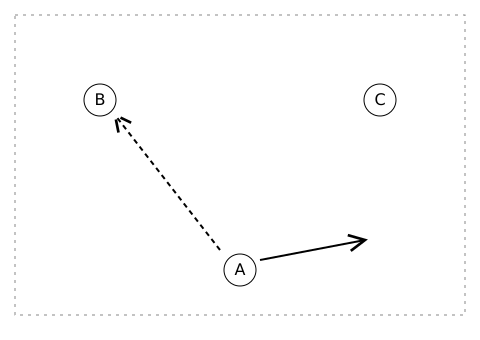
A passes to B, then walks to the empty outside spot along the solid arrow. C remains visible as B’s next target. B waits for ready hands; A’s movement alone does not trigger the next pass.
Solid arrows show player movement; dashed arrows show the ball. The dotted edge marks an illustrative work area, not regulation boundaries.
Step 1: A passes to B, waits for the catch and walks to the empty outside spot. C stays visible as B’s next target. B holds the ball until C is ready instead of passing simply because A began moving.
Step 2: End after the next controlled catch and switch the first sender. If the movement crowds the receiver, walk the pattern without a ball. The adult watches whether the new spot gives a real next pass.
Coach cue: Make a window the next person can see.
Easier version: Use a still pair with a pause after each catch.
Harder version: Add a passive adult who closes one outside angle.
Observe: The receiving space remains clear after the first pass.
Control, notice and choose a stop
- Goal: Look at one visible signal while keeping a deliberate ending.
- Readiness: Can bounce in place or use a held-ball version.
- Players: One worker and one adult cue giver.
- Space: Separate clear spots with no shared travel route.
- Equipment: One manageable ball and two visible direction markers.
- Editable example time: 3 minutes, equal brief working turns.
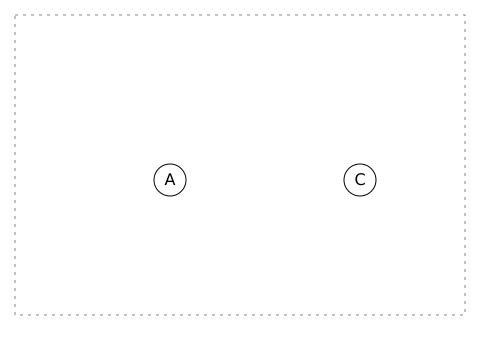
A bounces at a still spot while adult C points to a direction cue. No travel is needed in the first turn: A notices the cue and catches at the stop instruction. Add one new demand after resetting.
Solid arrows show player movement; dashed arrows show the ball. The dotted edge marks an illustrative work area, not regulation boundaries.
Step 1: A uses a calm still bounce while the adult points to a direction marker. A names or points toward the cue, then catches deliberately at the stop instruction. Keep the eyes open and the surrounding floor visible.
Step 2: After a reset, offer the other hand or a short known walk, not both new demands at once. A held-ball response is a simpler movement task and is labeled as such rather than a live dribble.
Coach cue: See one cue and finish with control.
Easier version: Hold the ball while responding to the signal.
Harder version: Use the familiar short lane after the still cue stays calm.
Observe: The response does not cause a loose ball or an uncontrolled stop.
Drills by age and experience
Use these contexts to find the starting collection. Group sizes and space descriptions are authored planning assumptions. Open the activity for its full setup and what to watch. Each row is a starting point. It is not a rule for every child of that age.
| Context | Collection | First task | Group arrangement | Space assumption | Equipment check |
|---|---|---|---|---|---|
| First exposure | Preschool activities | Rolling, movement and reachable targets | Adult-led pairs or small group | No hoop required | A manageable ball and clear spots |
| Early learning | Five-year-old activities | One instruction, shared turns and simple choices | Pairs or small supervised group | No hoop or suitable low target | Ball and optional flat markers |
| Mixed readiness | Eight-year-old activities | Control, receiving and a first decision | Pairs, triangles and small games | One basket plus separate no-hoop space | Ball, clear spots and local rules |
| Skill into decisions | Ten-year-old activities | Moving control, pass-and-move and outlets | Small adult-supervised groups | Clear half court or separate stations | Suitable ball and basket |
| Any age new to a task | Beginner activities | Stop, catch and see a next action | Pairs before larger games | Short lanes; basket optional | One ball can be shared |
| Older skill teaching | Middle-school activities | Pressure and help; rebounds and small games | Rotate the working jobs | Defined court area with clear exits | Ball and adopted defensive rules |
Scroll for more →
- Preschool basketball drills keep movement and ball familiarity short.
- Basketball drills for 5 year olds add simple choices and partner turns.
- Basketball drills for 8 year olds offer mixed-readiness versions.
- Basketball drills for 10 year olds connect control to a visible outlet.
- Basketball drills for beginners start with the action rather than age.
- Basketball drills for middle school add suitable pressure and team decisions.
Drills by skill
Choose dribbling drills when the ball runs away, the eyes stay down or a turn breaks control. The collection separates those problems instead of assuming every player needs a faster course.
Choose passing drills when a receiver is not ready, the pass arrives late or a lane is covered. The receiving window matters as much as the sender’s movement. A reading task can end with a correct decision to hold the ball.
Use shooting drills for a close release and a controlled catch before an attempt. Use layup drills when the final approach and chosen basic footwork need to be seen separately. Keep the actual rule on gaining control distinct from a rhythm cue.
The defense collection begins with containment and stopping under control. Add help only where permitted. The rebounding collection teaches the catch and outlet as well as finding legal space. A starting stance does not finish possession.
Small-space and home options
Home basketball activities include no-bounce and no-hoop choices. A wall needs permission and a checked return zone. A driveway basket needs its own correct setup and a clear collection route. This library does not certify a room or home installation.
For a playful group, use fun basketball drills with a specific skill purpose. A game can use a shared target or direction choice without elimination. Keep the task easy to explain, and remove the extra game rule if it obscures the action.
Build a practice from the drills
Select one main skill and a short game that lets the group use it. Count the time for explanations and water. Include each station change too. Do not assemble every example time on a page into an accidental long workload. The practice plan provides completed schedules and blank printable sheets.
Observe the same task under the same stated conditions before making a comparison. A longer pass or different basket changes the context. Keep only a group-level note about the action, then choose a specific next lesson. No child roster or individual record is collected here.
Equipment and teaching notes
Use a suitable ball and target under the program’s rules. Flat markers should clarify a route without sitting where a foot must land. Keep waiting spots outside active passing and shooting lanes. Stop all balls before changing groups between stations.
Teach with a slow demonstration and one cue. Let the group try it before adding another correction. If the task repeatedly causes a scramble, reduce its movement or uncertainty. An adult should be able to explain what the simpler version preserves and what the harder version adds.
FAQ
Is the age page always the best starting choice?
No. It offers a context, while actual control determines the version. A new older player may need the beginner receiving task. A younger player may manage a more involved pass under the local rules. Choose from what the group can do, without treating an age label as an individual skill assessment.
Do these drills require player accounts?
No. All instructions and diagrams are readable in the page. Practice worksheets are ungated and stay on paper or your own device. Do not enter child names, photos or individual performance records through this site. An anonymous group observation is enough to choose what to teach next.
Choose the next coaching task
Youth Basketball Tips · https://youth-basketball-tips.com/youth-basketball-drills/