
Youth basketball drills
Rebounding drills: positioning, timing and possession
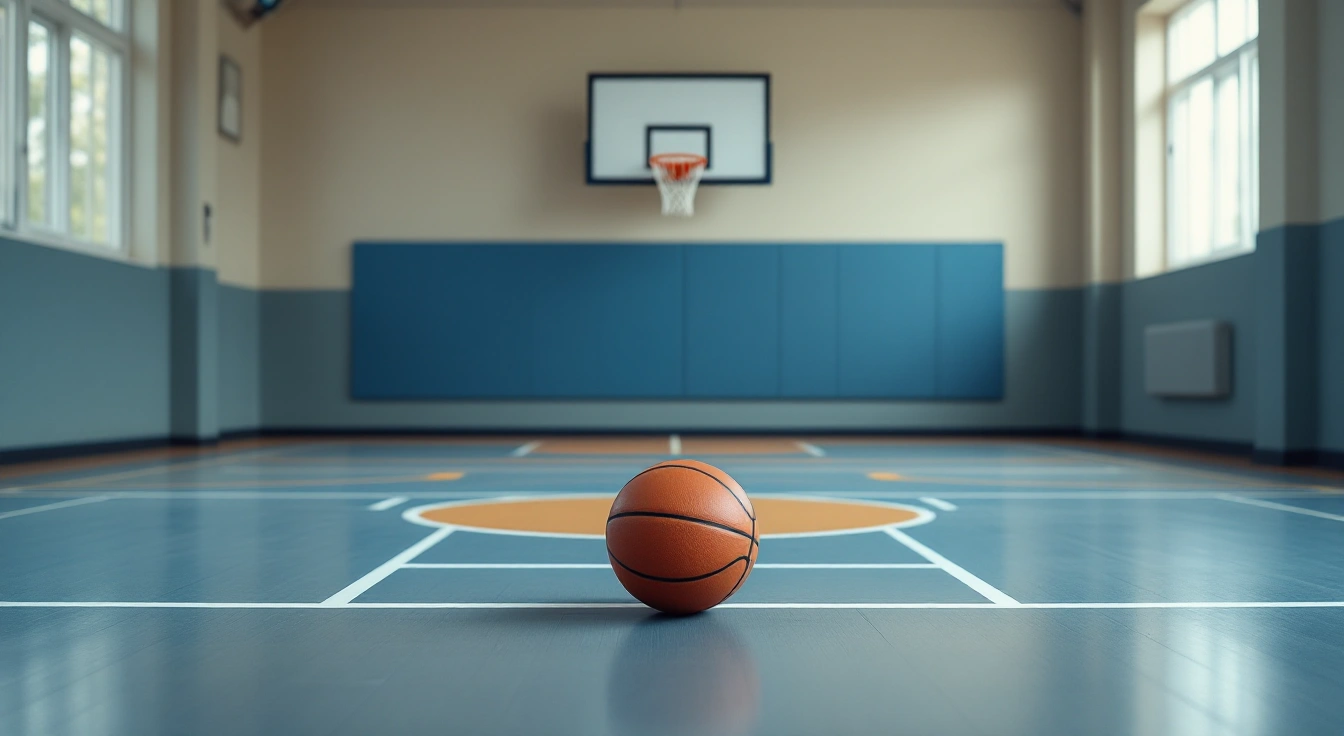
Rebounding drills should teach seeing the ball, finding legal space and securing possession before an outlet. Start with gentle adult tosses and clear landing areas. A scramble under a hard shot is a poor first task for a group still learning where to stand.
Use a track-and-catch activity before adding a nearby opponent. Then teach position without pushing, a controlled outlet and a small possession game. Every count and time here is an original editable example. These drills do not promise jumping gains or injury prevention, and no player must fight through contact to take a turn.
Rebounding is a distinct category in the USA Basketball foundational curriculum. Teach the catch and secure possession before adding an opponent or an outlet decision.
On this page
Group and equipment checks
Choose a group that can follow the stop cue and catch a gentle ball. Keep other stations away from the rebound lane. The adult sets the toss and watches the landing area. A basket is optional for the first three tasks; a soft controlled toss can show the same viewing and possession decision.
Track and secure the ball
- Goal: Follow a gentle flight and finish with control.
- Readiness: Can catch a short adult toss.
- Players: One catcher at a time with an adult.
- Space: Open floor with a clear landing spot.
- Equipment: One suitable ball.
- Editable example time: 2 minutes, exchange catchers often.
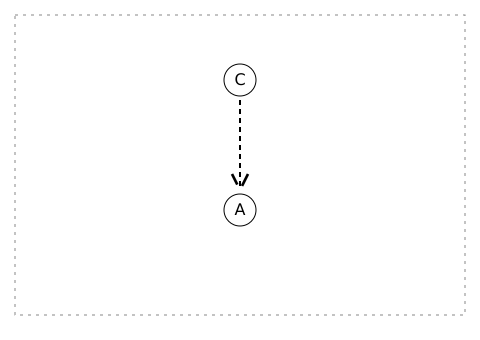
C is the adult tosser and A catches in the clear area. Here A secures the ball and returns it to C. Add a separate outlet receiver only in the later outlet activity.
Solid arrows show player movement; dashed arrows show the ball. The dotted edge marks an illustrative work area, not regulation boundaries.
Step 1: The adult tosses a gentle ball toward a reachable clear spot. A watches its flight, moves into position and catches without another player contesting. Stop before adding height or distance.
Step 2: After the catch, A holds the ball under control and looks toward the adult. Return it with a gentle pass. A touched ball is not the end of the task until control is clear.
Coach cue: See it, then secure it.
Easier version: Use a bounce or two-hand handover.
Harder version: Vary the toss slightly left or right.
Observe: The catcher controls the ball and lands in clear space.
Positioning without pushing
- Goal: Locate another player before pursuing the ball.
- Readiness: Can stop beside a partner without contact.
- Players: Two and an adult.
- Space: Wide space with a marked rebound area.
- Equipment: One ball for the adult.
- Editable example time: 3 minutes at walking pace.
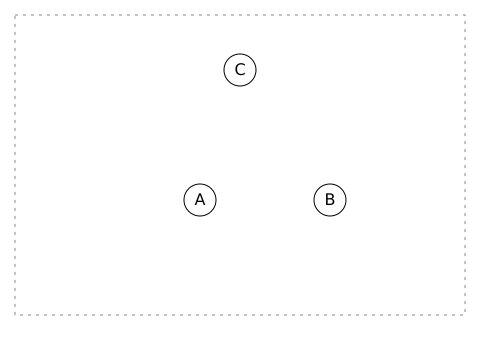
C holds the ball while A locates shadow B and the rebound space. Keep a gap with no shove or backward bump. C then gives A an uncontested toss; the frame shows the starting positions, not a contact contest.
Solid arrows show player movement; dashed arrows show the ball. The dotted edge marks an illustrative work area, not regulation boundaries.
Step 1: A and B start with a gap. The adult holds the ball and asks A to point toward B, then toward the rebound space. A walks to a useful position without a shove, grab or backward bump.
Step 2: The adult gives A a gentle uncontested toss. Exchange who sees the opponent first. This learning version teaches the viewing sequence before any permitted live contest.
Coach cue: Find the player without moving through them.
Easier version: Point and hold the position without a toss.
Harder version: Let B walk to a different starting side.
Observe: A sees both tasks and keeps legal space.
Partner rebound and outlet
- Goal: Keep the ball through the first pass.
- Readiness: Can catch and pass to a ready partner.
- Players: Two plus an adult tosser.
- Space: Catch area and a separate outside outlet.
- Equipment: One ball.
- Editable example time: 3 minutes, swap after each outlet.
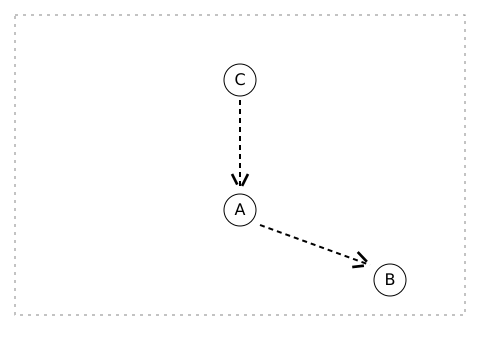
C tosses to A, who secures, turns and sends to outside outlet B along the second dashed route. B stays clear of the landing area and returns the controlled catch to C before the jobs swap.
Solid arrows show player movement; dashed arrows show the ball. The dotted edge marks an illustrative work area, not regulation boundaries.
Step 1: The adult tosses to A while B waits outside the catch area. A secures the ball, turns legally and sees B’s hands. B should be visible rather than hidden behind the adult.
Step 2: A passes only after control is clear. B catches and returns the ball to the adult. Exchange jobs so both players practice finding an outlet rather than racing a dribble away.
Coach cue: Keep possession before sending it on.
Easier version: Keep B still in a short open window.
Harder version: Let B choose between two nearby outlet spots.
Observe: The catch and pass remain controlled as one possession.
Small-group possession game
- Goal: Recognize who secures a rebound and where the outlet is.
- Readiness: Ready for the program’s permitted level of contest.
- Players: Three working with an adult.
- Space: A marked clear rebound zone and outside target.
- Equipment: One ball.
- Editable example time: 4 minutes, short controlled turns.
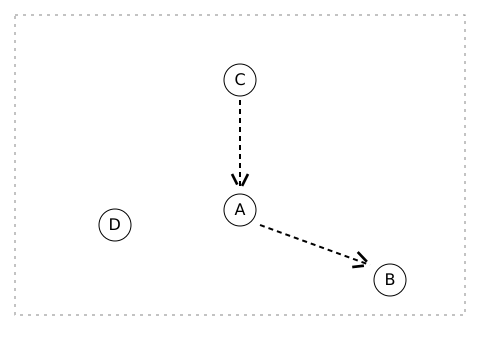
C is the adult tosser, A the assigned catcher and B the outside outlet. D shadows from a separate spot without contact or a steal. Secure the C-to-A toss before the A-to-B outlet pass.
Solid arrows show player movement; dashed arrows show the ball. The dotted edge marks an illustrative work area, not regulation boundaries.
Step 1: Begin with A as catcher, D as shadow opponent, B as outlet and C as adult tosser. The adult tosses gently, the catcher secures and passes to the outlet. The shadow player moves without contact or a steal in the first version.
Step 2: Only if the group and local rules permit it, allow a limited live contest for the ball. Keep the toss reachable and stop on contact or a crowded landing area. Rotate the outlet as well as the rebound job.
Coach cue: Finish with a catch your teammate can use.
Easier version: Keep the opponent still and non-contesting.
Harder version: Let the adult vary which clear area receives the toss.
Observe: The group completes the outlet without a push or loose-ball chase.
Put these activities into a practice
Use one control task before a later small-sided game. Keep the legal-contact lesson explicit under the adopted rules rather than treating all body contact as the same. If a rebound task creates repeated crowding, reduce the group and return to a predictable toss.
Record the possession task, not a child’s jump height or a promised athletic gain.
FAQ
Does a rebounding drill need a basket?
No. A gentle adult toss can teach flight tracking, a controlled catch and the outlet. State that this is a teaching version rather than a live shot rebound. Add the basket when its shot and retrieval routes can be managed, while keeping the landing area clear.
Choose the next coaching task
Youth Basketball Tips · https://youth-basketball-tips.com/youth-basketball-drills/rebounding-drills/