
Youth basketball drills
Basketball passing drills: accuracy, timing and movement
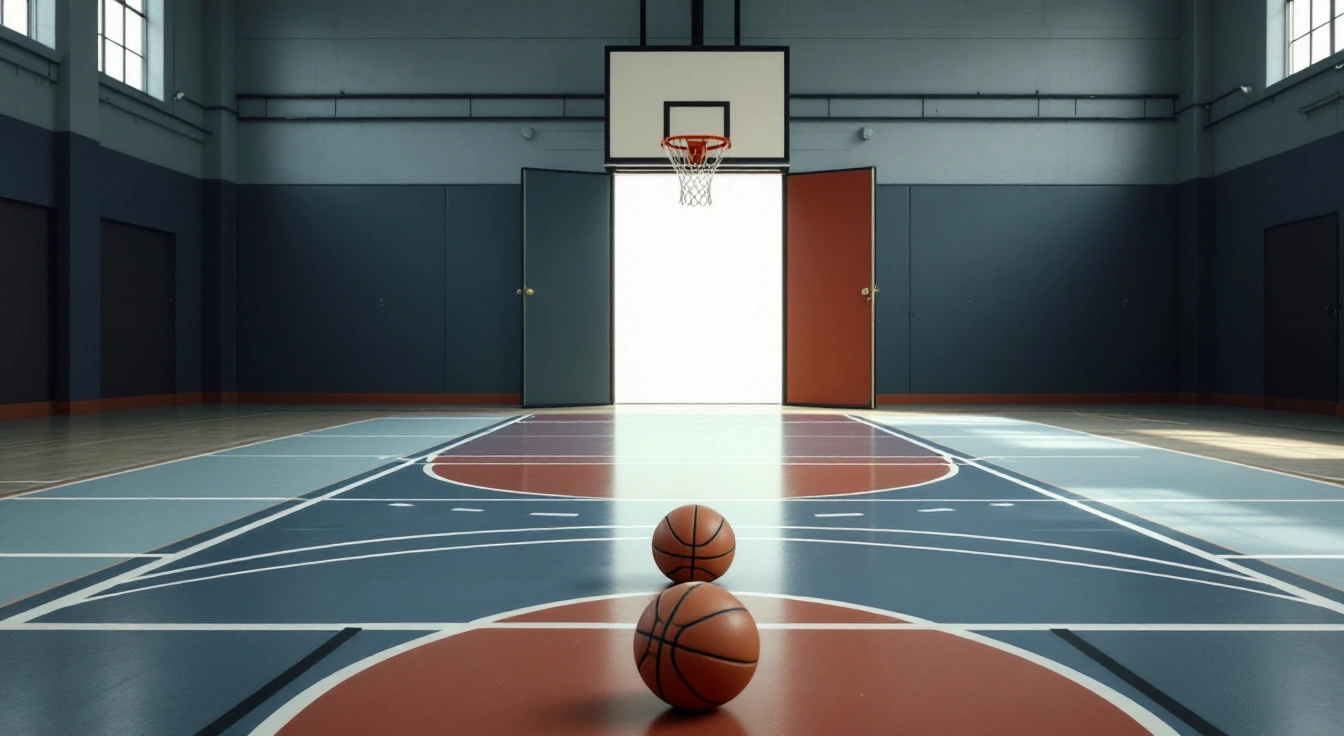
Basketball passing drills should give the receiver as much purpose as the sender. Use a visible target, a clear route and a decision after the catch. These original activities progress from a still exchange to moving receivers and a defender who can close one window.
Begin with a pass a partner can catch without jumping. Add movement, then a choice between targets, while keeping the ball and travel routes separate. The counts and timings below are editable examples rather than official prescriptions. No child names or scores are needed. A ball handler who keeps the ball when every lane is covered can be reading the task correctly.
Passing and receiving are linked tasks in the USA Basketball foundational curriculum. In these progressions, the catch and next visible target decide when to advance.
On this page
Group and equipment checks
Use pairs or small groups with enough space between passing lanes. Check the local age and defense rules before adding interception or crowding. A ball and flat markers are enough for most tasks. Each receiver needs a clear place to catch and a legal next action; do not set the target directly beside a wall or in another pair’s return lane.
Target passing and receiving
- Goal: Find a ready receiver before sending.
- Readiness: Can hold the ball and catch a gentle short pass.
- Players: Pairs with one ball.
- Space: One unobstructed lane for each pair.
- Equipment: One suitable ball and optional floor spots.
- Editable example time: 3 minutes, pause between pass types.
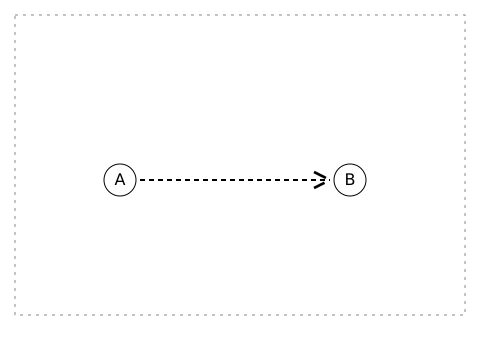
A and B exchange along the dashed route, waiting for visible hands and a controlled catch. The diagram fixes the sending lane, not a compulsory bounce point. Choose the gap for an easy first catch.
Solid arrows show player movement; dashed arrows show the ball. The dotted edge marks an illustrative work area, not regulation boundaries.
Step 1: A shows the ball, waits for B’s hands and sends a controlled chest pass. B catches and pauses before returning. Keep the first distance short enough for a gentle flight and an easy catch.
Step 2: After a settled exchange, try a bounce pass as a separate round. B’s arriving catch decides whether the bounce point and force work. Do not demand a fixed floor fraction when the ball reaches the receiver at the wrong height.
Coach cue: A pass succeeds at the receiver’s hands.
Easier version: Use a roll to a still partner.
Harder version: Move the receiver a little farther while keeping the same pass.
Observe: The receiver controls the ball without chasing the catch.
Pass on the move
- Goal: Lead a receiver into a clear spot.
- Readiness: Can catch while taking a slow step.
- Players: Pairs with an adult checking routes.
- Space: Short side movement away from other lanes.
- Equipment: One ball and two receiving markers.
- Editable example time: 4 minutes, exchange sender and mover.
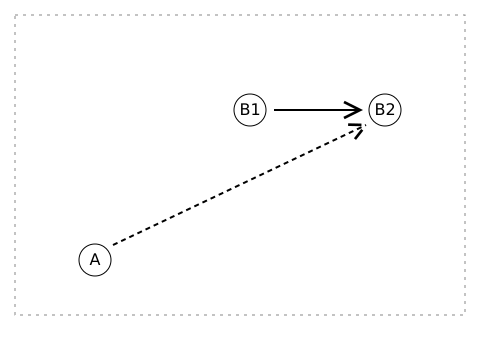
Receiver B walks from B1 to B2 along the solid arrow. A sends the dashed pass toward B’s reachable path. End on the catch, return separately and exchange jobs before the next turn.
Solid arrows show player movement; dashed arrows show the ball. The dotted edge marks an illustrative work area, not regulation boundaries.
Step 1: B begins at one spot and walks sideways into the next clear spot. A passes toward the path B can reach comfortably, not behind the starting position. Stop after the catch to inspect timing.
Step 2: Return by a separate route and exchange jobs. If B must stretch behind or accelerate suddenly, slow the walk and shorten the path. Fix the feed rather than tell the receiver to rescue every late pass.
Coach cue: Send to the space the receiver can use.
Easier version: Keep B still until the pass is released.
Harder version: Let B choose when to begin the known route.
Observe: The catch arrives in front of the moving receiver without a lunge.
Pass-and-cut drill
- Goal: Leave a useful space after passing.
- Readiness: Can complete the still exchange and follow a route.
- Players: Three attackers with no defense first.
- Space: A broad triangle with a clear middle and exit.
- Equipment: One ball and three flat spots.
- Editable example time: 4 minutes, rotate the first passer.
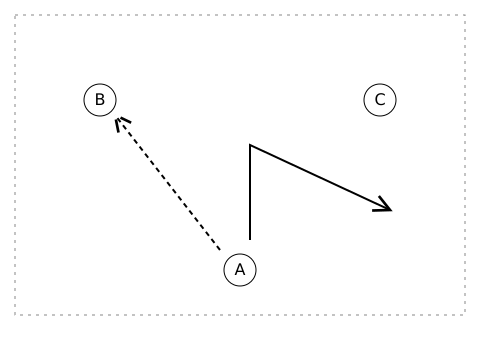
A sends to B and offers the solid cut before clearing outside. C stays available as another target. B returns to A only while the cut window is open; otherwise B sees C.
Solid arrows show player movement; dashed arrows show the ball. The dotted edge marks an illustrative work area, not regulation boundaries.
Step 1: A passes to B and offers a slow cut through the clear middle. C stays visible outside. B returns to A only if the cut window is open; otherwise B keeps the ball and sees C.
Step 2: A clears to the empty outside area while C fills the vacated spot after the cut. Freeze once to name the next receiving window. A completed cut is not a command for B to force the ball into it.
Coach cue: Pass, offer a route, then leave space.
Easier version: Walk the cut without a return pass.
Harder version: Add one passive adult who closes the cut.
Observe: The ball handler can use the outside option when the cut is covered.
Read the defender
- Goal: Choose between two distinct receiving windows.
- Readiness: Can see and reach either nearby receiver.
- Players: Passer, two receivers and a passive defender.
- Space: Open triangular area with no crossing routes.
- Equipment: One ball.
- Editable example time: 4 minutes, rotate all four jobs.
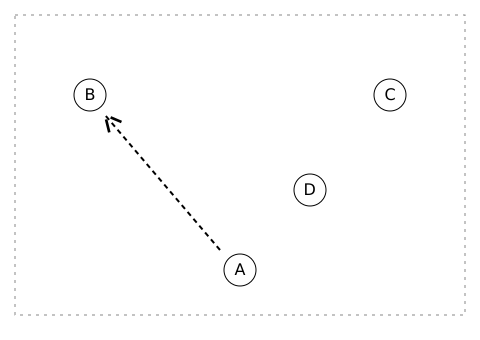
A has receivers B and C. D shades one line without reaching, leaving A to choose the other. The dashed route illustrates one pass; change the shaded line before the next turn.
Solid arrows show player movement; dashed arrows show the ball. The dotted edge marks an illustrative work area, not regulation boundaries.
Step 1: A has B on one side and C on the other. D stands toward one line without reaching or contact. A looks, waits for the open receiver’s target and makes that pass. The other receiver stays available rather than following the ball.
Step 2: For the next turn, D chooses the other line before the start. Later allow a slow visible choice after A receives. If both lines close, end with a controlled hold and discuss the missing window rather than demand a throw.
Coach cue: Read the person in the lane, not the printed arrow.
Easier version: Tell A which receiver will be open.
Harder version: Let D choose the closed line at walking pace.
Observe: A sees the open target and accepts a no-pass result when needed.
Receiver shows a new angle
- Goal: Help the ball handler when the first window disappears.
- Readiness: Understands a still target and a slow side move.
- Players: One passer, one receiver and a passive adult blocker.
- Space: A short wide area with two safe receiving spots.
- Equipment: One ball and two floor spots.
- Editable example time: 3 minutes, then exchange jobs.
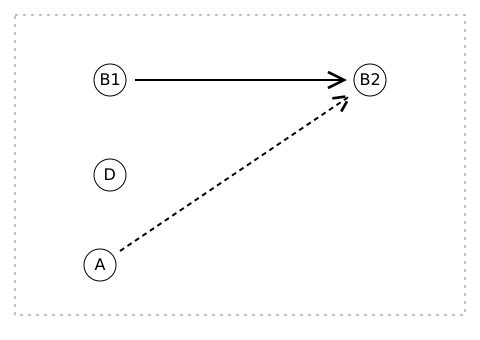
Adult D blocks the first line from A toward B1. B walks along the solid route to B2 and shows hands for the dashed pass. B1 and B2 are two positions for the same receiver, not extra players.
Solid arrows show player movement; dashed arrows show the ball. The dotted edge marks an illustrative work area, not regulation boundaries.
Step 1: The adult stands in the first passing line. B walks to the alternate marked spot and shows hands. A keeps the ball until B is visible, then sends a gentle pass through the open window.
Step 2: Return the ball and restore the first spots. On a later turn, the adult can leave the original line open so B does not have to move. The receiver should read the block rather than move by habit every time.
Coach cue: Move into sight before asking for the ball.
Easier version: Remove the blocker and rehearse the second spot.
Harder version: Let the blocker choose one of the two windows.
Observe: B’s movement creates an actual line rather than a second covered target.
Catch, turn and outlet
- Goal: Make the first catch lead to a legal next pass.
- Readiness: Can stop and identify a planted foot under the local rule.
- Players: Three in a spaced triangle.
- Space: Separate receiving and turning space.
- Equipment: One ball.
- Editable example time: 4 minutes, reverse the passing direction.
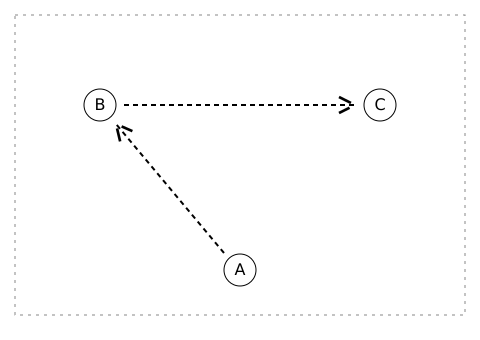
A sends to B first; B catches, turns legally and passes to C. The two dashed arrows show the order. Keep the receiving spots still while teaching the turn, then reverse the triangle.
Solid arrows show player movement; dashed arrows show the ball. The dotted edge marks an illustrative work area, not regulation boundaries.
Step 1: A sends to B, who catches in balance and looks to C. B uses the chosen legal turn to see C without shuffling toward the next lane. C waits with hands visible rather than walking behind the adult.
Step 2: B passes only after control and the window are clear. Reverse the triangle so the turn is seen from the other side. A dropped catch restarts calmly at the same stage rather than turn into a race around the triangle.
Coach cue: Keep the first catch before sending the next pass.
Easier version: Pause with the ball and point to C.
Harder version: Let C take a slow step to a different open angle.
Observe: B keeps balance and sees the outlet before releasing.
Rotations and common errors
- Goal: Give every participant a meaningful turn in a constrained space.
- Readiness: Group understands one familiar passing task.
- Players: Three or four with one ball.
- Space: One working lane with a waiting spot outside it.
- Equipment: One ball and visible turn order.
- Editable example time: 4 minutes, fixed short turns.
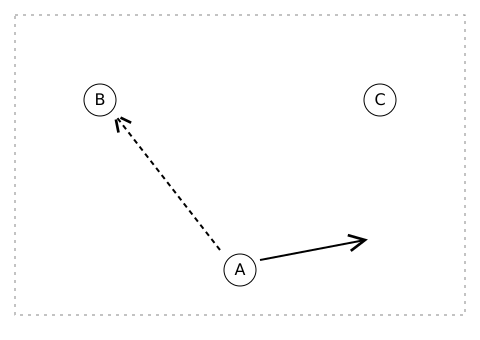
A passes to B and exits toward the outside waiting space on the solid arrow. C becomes the next receiver only after the lane clears. Explain the full rotation before adding an observer or another player.
Solid arrows show player movement; dashed arrows show the ball. The dotted edge marks an illustrative work area, not regulation boundaries.
Step 1: Use a sender, receiver and next receiver. After a catch, the old sender moves to the waiting spot outside the lane and the next player enters only when it is clear. Tell everyone the rotation before passing begins.
Step 2: If an extra player joins, make the short turn order explicit instead of adding another active ball. A waiting adult-selected observer can watch the agreed catch task, then enter at the next turn. Keep child names and personal scores off public sheets.
Coach cue: Know who enters before the next ball moves.
Easier version: Return to one still pair while the adult resets the order.
Harder version: Use a moving receiver only after the rotation stays clear.
Observe: No player waits indefinitely or enters a live passing route.
Put these activities into a practice
Build a block around the receiver’s task. If catches are out of reach, use the target activity before a defender. If targets are clear but passes are forced, use the two-window reading task.
An authored 18-minute example can use 3 minutes of target work, 4 of moving catches, 2 for water and reset, 4 of pass-and-cut, 3 of a defender choice and 2 of review. Keep the task and condition with any group observation. A faster round with a shorter distance is not evidence of a long-term passing gain, and a missed pass should not remove a player from the next turn.
FAQ
Should every pass be thrown harder as the group progresses?
No. The useful pass reaches a ready teammate through the available window. Progress can mean seeing a moving receiver or choosing a different line without adding force. Keep the catch task clear and alter one demand at a time. A hard pass that cannot be received does not meet the goal.
Can a player choose not to pass in a passing drill?
Yes, if the task genuinely presents covered windows. End that turn with a controlled hold and show how a receiver could make an open angle. Do not reward a forced throw just to keep the sequence moving. A reading drill needs to accept the decision that the illustrated defense creates.
What if the passer cannot reach a visible receiver?
Shorten the distance or move the receiving angle before adding force. A target can be visible and still be too far away for a controlled pass. Keep the same readiness cue and try the shorter version. If the catch remains rushed, use a still receiver or a roll, then observe that task again.
Choose the next coaching task
Youth Basketball Tips · https://youth-basketball-tips.com/youth-basketball-drills/basketball-passing-drills/