
Youth basketball drills
Layup drills: progress from steps to decisions
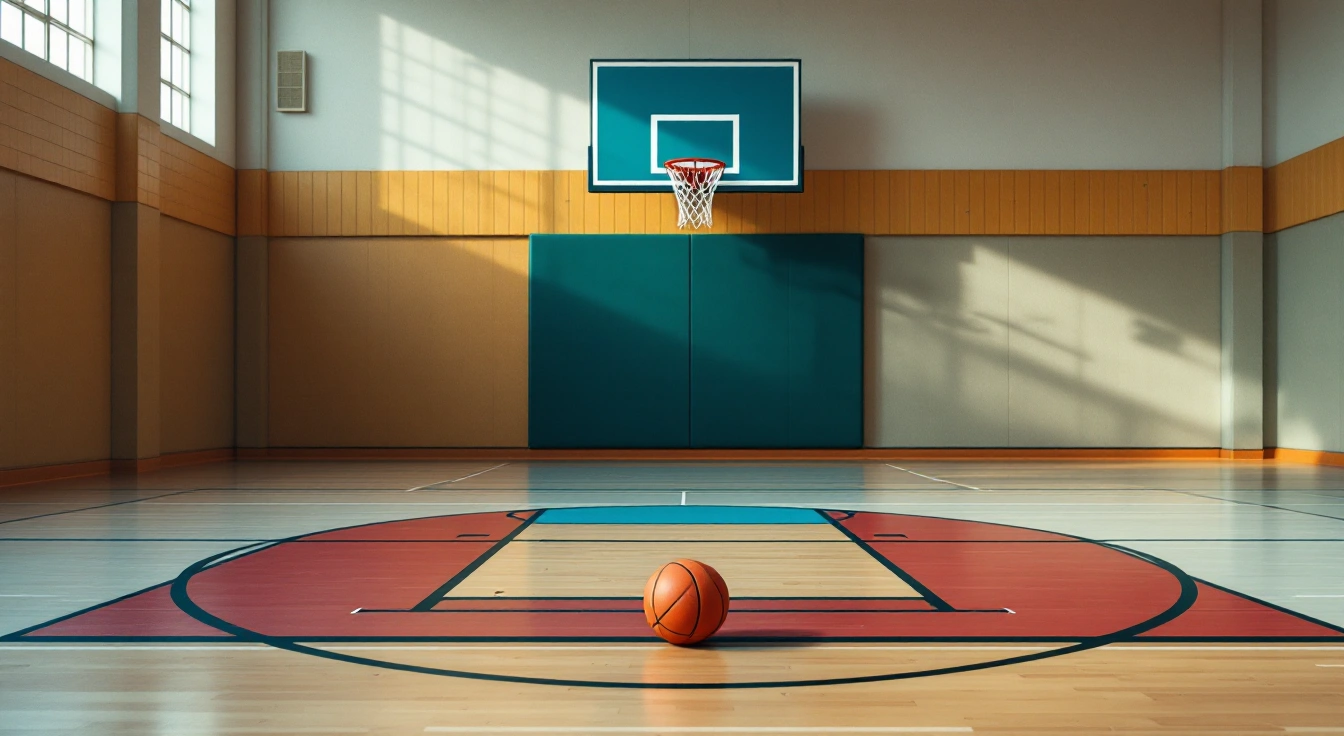
Layup drills work best when the coach can see the final step and the landing. Begin close, keep one active finish at a time and add the approach only when the movement remains calm. Use both sides without making the less familiar side copy the stronger side’s pace.
Start with a no-ball footwork walk-through, then a short approach and close finish. Add the opposite side and a pass before a live decision. These are authored drill examples, not a universal step-count rule. The adopted code determines when control was gained and what movement is legal; the basic one-foot finish is one teaching choice.
The USA Basketball stride-stop layup lesson connects the approach and finish. Keep the final step and landing calm before extending the route.
On this page
Group and equipment checks
Use a suitable basket and ball, a clear approach lane and a separate exit. Mark waiting spots away from the rebound route. Players need to stop on cue and understand a gentle takeoff. Keep the early rounds free of defenders, and check the local program before adding contact or a live blocking attempt.
Footwork walk-through
- Goal: Connect the final step to the chosen basic finish.
- Readiness: Can walk, stop and follow a side cue.
- Players: One mover, one adult observer.
- Space: Close side approach without traffic.
- Equipment: Optional flat takeoff marker.
- Editable example time: 2 minutes, then exchange sides.
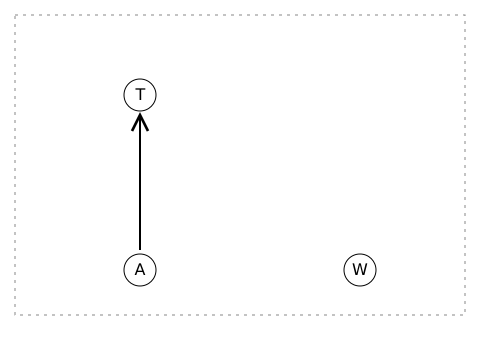
A rehearses the final approach toward T without a ball; W waits outside the landing space. Use the right-side takeoff and reach described in the steps, then mirror the same controlled movement for the left.
Solid arrows show player movement; dashed arrows show the ball. The dotted edge marks an illustrative work area, not regulation boundaries.
Step 1: Without a ball, show the right-side basic finish using a left-foot takeoff and right-hand reach. Walk the final movement with room to land. Mirror it for the left side when the first pattern is understood.
Step 2: Add a held ball only after the final step is calm. Keep the start legal under the program’s rules rather than add arbitrary steps while already holding the ball.
Coach cue: Make the last step clear before adding the run.
Easier version: Use a still reach with both feet down.
Harder version: Add one short walking approach from a marked start.
Observe: The chosen takeoff stays controlled without an extra shuffle.
Controlled approach and finish
- Goal: Reach a close target without running past it.
- Readiness: Understands the final movement and can hold the ball.
- Players: Shooter, feeder and waiting player.
- Space: One side approach and a clear side exit.
- Equipment: One ball and basket.
- Editable example time: 3 minutes, one attempt then rotate.
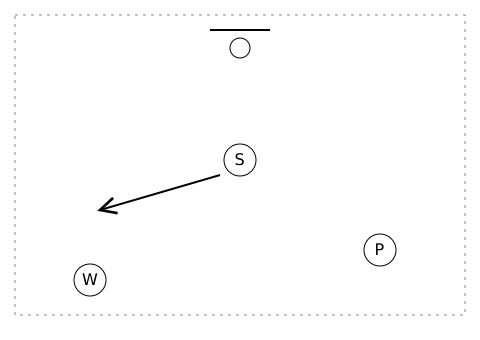
S takes the short controlled approach to the close finish while P waits outside the landing route and W waits for a turn. S clears along the solid exit before collection or the next approach.
Solid arrows show player movement; dashed arrows show the ball. The dotted edge marks an illustrative work area, not regulation boundaries.
Step 1: S begins a short slow approach on the chosen side. The first version uses no defender and only the agreed final movement. P waits until S has landed and left before preparing the next turn.
Step 2: If the finish carries S past the basket, shorten and slow the approach. A made shot after a wild run is not the observation being sought. Restore a comfortable landing before adding distance.
Coach cue: Arrive near the basket with room to finish.
Easier version: Remove the approach and shoot from a close still spot.
Harder version: Add a slow live dribble start with rule-checked footwork.
Observe: The player keeps a usable release and does not collide with the collector.
Both-side finishing
- Goal: Give the mirrored side its own learnable start.
- Readiness: Can attempt the basic finish on each side.
- Players: Small group with one active route.
- Space: Right and left starts used in separate turns.
- Equipment: One ball and a basket.
- Editable example time: 4 minutes, alternate side after each turn.
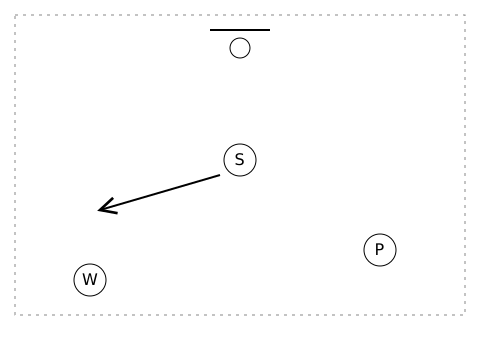
S begins at the comfortable close spot on one side; P collects and W waits. The solid exit clears the landing space. Mirror the setup only after the first ball is secure, with no converging shooters.
Solid arrows show player movement; dashed arrows show the ball. The dotted edge marks an illustrative work area, not regulation boundaries.
Step 1: Let S choose a comfortable close starting spot on the less familiar side. Show the mirrored hand and takeoff. Keep the other side inactive while the turn is under way, rather than send converging shooters.
Step 2: Move to the other start after the ball is controlled. The next player takes a turn before repeating. The adult watches the same finishing task on both sides without demanding identical speed.
Coach cue: Give each side a controlled attempt.
Easier version: Use a two-hand target send on the unfamiliar side.
Harder version: Use a short pass from the side already understood.
Observe: The group can name the mirror without rushing the weaker side.
Pass-and-finish rotation
- Goal: Make a feed the finisher can use.
- Readiness: Can receive a gentle pass near the final step.
- Players: Passer, shooter and collector.
- Space: A clear feed lane outside the landing route.
- Equipment: One ball.
- Editable example time: 4 minutes, rotate every job.
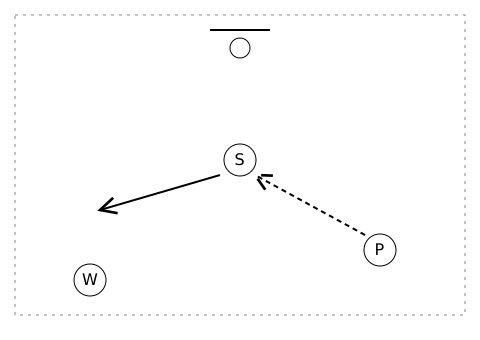
P feeds S at the known catching spot along the dashed route. S uses the agreed legal finish and then the solid exit. W waits clear until collection; repeat a late feed instead of chasing it.
Solid arrows show player movement; dashed arrows show the ball. The dotted edge marks an illustrative work area, not regulation boundaries.
Step 1: P sends a short accurate pass to S at a known spot. S catches under the adopted footwork rule and uses the familiar close finish. The collector waits until the landing area is clear before retrieving.
Step 2: Stop a late feed rather than ask S to lunge after it. Repeat the same starting angle until the catch fits. Then exchange jobs so the passer learns how timing affects the finish.
Coach cue: Send the ball to a controlled catch.
Easier version: Pause after the catch before the shot.
Harder version: Vary the pass timing slightly while keeping the route familiar.
Observe: The feed helps the finish instead of forcing a scramble.
A live decision progression
- Goal: Recognize when a layup route is closed.
- Readiness: Group is ready for a passive defender and a pass outlet.
- Players: Finisher, outlet and shadow defender.
- Space: Half-court area with an open outside receiver.
- Equipment: One ball and basket.
- Editable example time: 3 minutes, end on shot or outlet catch.
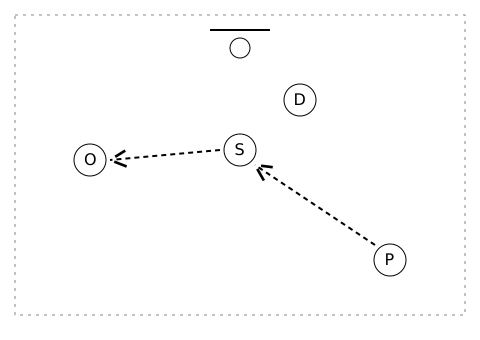
S reads defender D before the final approach. P is the feeder and O the outside outlet. If D closes the finishing route, S uses the dashed pass to O and ends the turn on that catch.
Solid arrows show player movement; dashed arrows show the ball. The dotted edge marks an illustrative work area, not regulation boundaries.
Step 1: The defender either stays away from the route or walks into a visible blocking position with a gap and no contact. S looks before the final approach. The outlet waits in a different clear lane.
Step 2: If the route is closed, S uses the outlet rather than force the finish. Keep the first decisions obvious, then vary the defender’s choice. End each turn before the next group enters the space.
Coach cue: A clear pass can be the right finish to the turn.
Easier version: Tell S which route the defender will close.
Harder version: Let the defender choose slowly after the start.
Observe: S reads the space before committing to the final steps.
Put these activities into a practice
Choose the first two drills for a beginner block, or the feed and choice tasks for a group already comfortable with the finish. Put transitions and water in the wider schedule. Keep a missed layup as information about the chosen cue, not a reason to run through another player’s turn.
Use a slower start when the final step is hard to see.
FAQ
Should both lines shoot at the same basket together?
Not in these introductory examples. The routes would converge near the basket and make the landing harder to manage. Use one active finish and a separate exit. A second group can work on a no-hoop receiving task elsewhere, provided an adult can supervise the actual spaces.
Choose the next coaching task
Youth Basketball Tips · https://youth-basketball-tips.com/youth-basketball-drills/layup-drills/