
Youth basketball drills
Preschool basketball drills: play-based activities for adults to lead
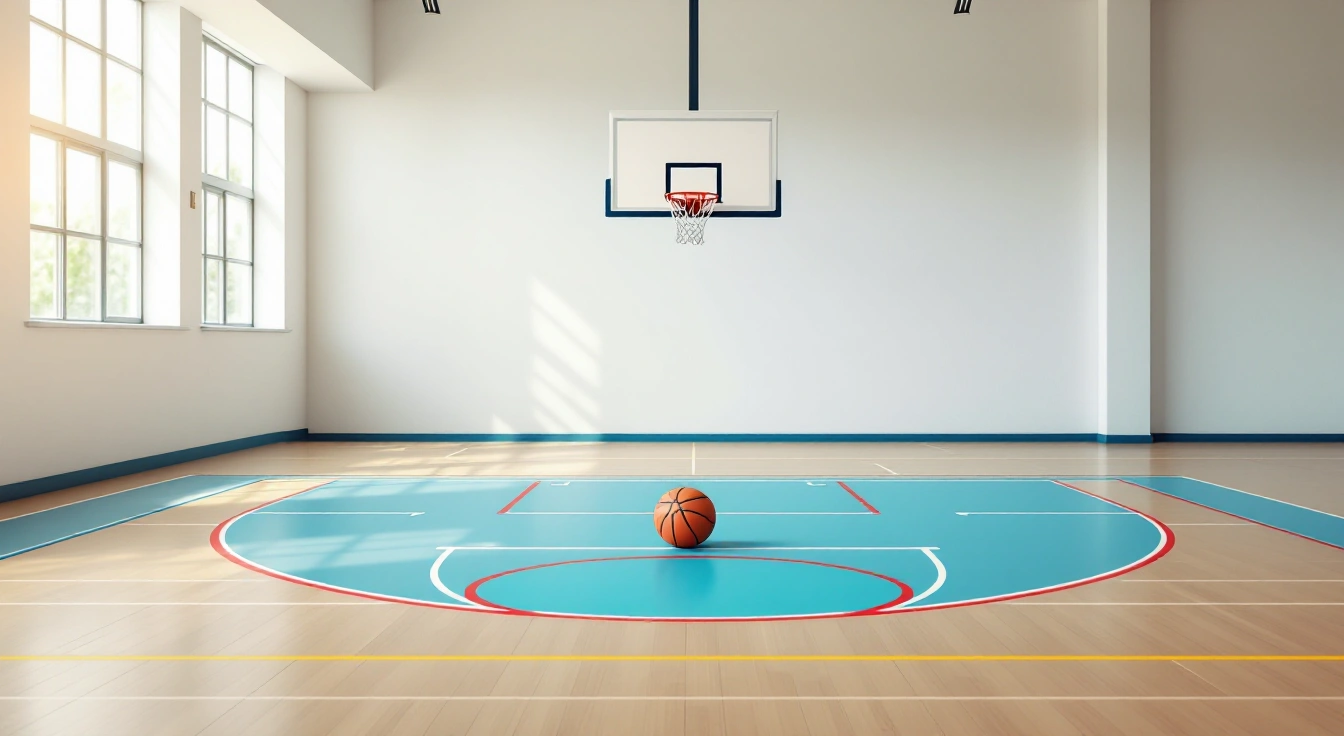
Preschool basketball drills can start with rolling, moving and stopping rather than a regulation basket. An adult should choose the version that the group can follow today. Keep each instruction brief and let a quiet reset replace an activity that no longer holds attention.
Use a clear floor, a manageable ball and reachable targets. Begin without bouncing or a hoop, model one task and give every child a turn without elimination. The published NBA/USA Basketball age tables start at ages 7 to 8, so these preschool examples are original teaching suggestions. Their timings are editable and do not establish an official preschool standard or a required workload.
The NBA/USA Basketball age guidance has no preschool practice-duration band. These walk, stop and rolling games are brief authored activities that an adult can shorten or replace.
On this page
Group and equipment checks
Follow the program’s supervision and safeguarding arrangements. Check arrivals and handover, plus water access with the organizer rather than leave the teaching area during play. Choose a surface where a slow roll stays predictable. The adult needs to see the working area and the retrieval route; if both cannot be managed, shorten the route or use a still activity.
Readiness and a safe space
- Goal: Recognize a simple stop cue before adding a ball.
- Readiness: Can join an adult-led movement game.
- Players: Small supervised group at separate spots.
- Space: Clear area with visible boundaries.
- Equipment: Flat non-slip spots; no ball first.
- Editable example time: 2 minutes, fewer turns if needed.
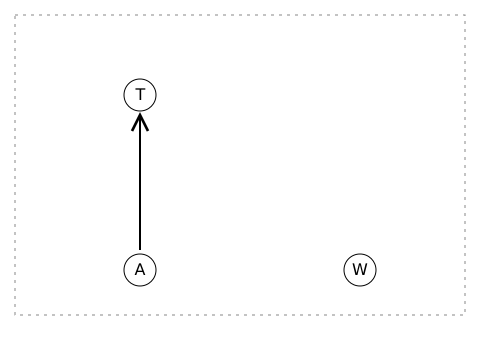
A copies the adult’s slow walk toward T and still stop; W waits outside the lane. Start without a ball. If the stop is missed, rehearse a still point-to-spot task before another moving turn.
Solid arrows show player movement; dashed arrows show the ball. The dotted edge marks an illustrative work area, not regulation boundaries.
Step 1: The adult walks to a free spot and stops with hands still. Ask the group to copy that one action. Keep the route slow and all movement in the same direction so paths do not cross.
Step 2: Show the stop again before the next turn. If the group keeps running, make the task a still point-to-a-spot activity rather than add balls. The adult watches the whole area instead of correcting one child while others move.
Coach cue: Walk to a space, then stop.
Easier version: Stay at one spot and copy an adult pause.
Harder version: Add a held ball after the no-ball route stays calm.
Observe: The group can pause inside the chosen area without a chase.
Roll and catch
- Goal: Wait for a partner and control a slow ground ball.
- Readiness: Can track and collect a gentle roll.
- Players: Child and adult, or a supervised pair.
- Space: Short lane with a clear end.
- Equipment: One soft suitable ball.
- Editable example time: 3 minutes, short exchanges.
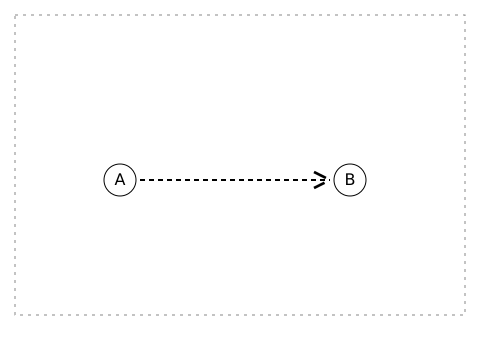
A is the adult and B the child receiving the gentle first roll. The dashed line keeps the exchange straight. Wait for control before returning; bring the partners closer if the ball passes beyond the catcher.
Solid arrows show player movement; dashed arrows show the ball. The dotted edge marks an illustrative work area, not regulation boundaries.
Step 1: The adult starts close, shows hands near the floor and rolls gently toward the child. Wait for the ball to be controlled before asking for a return. A seated or kneeling version may fit the program and surface if the adult approves it.
Step 2: Keep the roll straight and slow. Bring the partners closer if the ball repeatedly stops short or passes beyond the catcher. Do not ask a child to run across another lane to rescue the exchange.
Coach cue: Wait for ready hands.
Easier version: Hand the ball over with no roll.
Harder version: Let the receiver choose one of two nearby clear spots.
Observe: The return begins after control rather than as a hurried swat.
Move and stop
- Goal: Carry a ball while keeping the route visible.
- Readiness: Can follow the no-ball stop cue.
- Players: One mover per short lane.
- Space: Clear path with no steps or obstacles.
- Equipment: A manageable ball and destination spot.
- Editable example time: 2 minutes, pause after each trip.
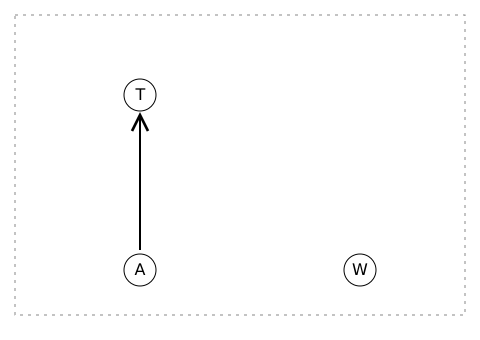
A carries the ball toward T and stops at the familiar cue. W waits outside the route. Return only after the stop; remove the ball if it blocks the player’s view of the floor.
Solid arrows show player movement; dashed arrows show the ball. The dotted edge marks an illustrative work area, not regulation boundaries.
Step 1: A carries the ball at a comfortable height and walks to T. The adult calls the familiar stop before the end. A remains still and looks toward the adult, then walks back by the clear route.
Step 2: If the ball blocks the child’s view or slips repeatedly, remove it and repeat the route. Carrying is the task here; do not call it legal game dribbling. A real dribble can wait for a later lesson.
Coach cue: See the floor while you carry.
Easier version: Walk with empty hands.
Harder version: Stop at one of two visible spots named before the start.
Observe: The child can stop without dropping the ball into another route.
Aim at a reachable target
- Goal: Send the ball with control toward a close visible place.
- Readiness: Can roll or gently send a ball with two hands.
- Players: One sender at a time with an adult collector.
- Space: A clear floor-target area.
- Equipment: A suitable ball and stable approved target.
- Editable example time: 3 minutes, one attempt per turn.
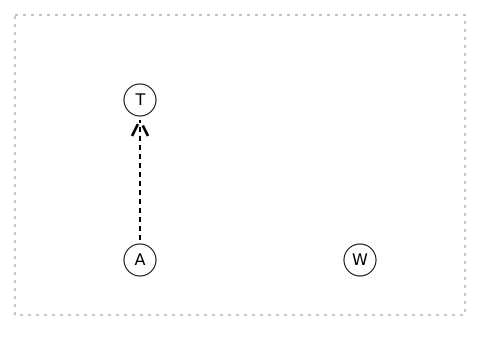
A sends a gentle roll from the still starting spot to floor target T. W stays outside the dashed ball route. The adult controls retrieval before the next child enters; move A closer if needed.
Solid arrows show player movement; dashed arrows show the ball. The dotted edge marks an illustrative work area, not regulation boundaries.
Step 1: Set a floor target close enough for a gentle roll. The adult shows the send, waits for the ball to stop and controls collection. The next child stays at a separate waiting spot until the adult returns the ball.
Step 2: Move the start closer when the ball repeatedly misses the whole target area. Keep the action calm instead of asking for a harder throw. A target hit is not required to keep a place in the activity.
Coach cue: Look at the target before sending.
Easier version: Use a broad target with the adult beside it.
Harder version: Use a smaller visible target without adding force or distance together.
Observe: The ball travels into the intended area with a controlled start.
A simple group game
- Goal: Follow one shared direction without elimination.
- Readiness: Can move with the adult and pause on cue.
- Players: Small supervised group with space between players.
- Space: A broad one-way route.
- Equipment: Optional held balls after the no-ball version.
- Editable example time: 3 minutes or end earlier.
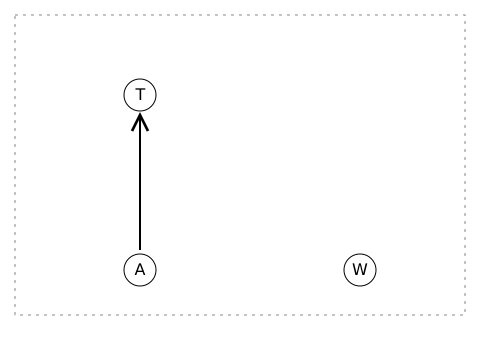
A follows the adult’s slow route toward T while W waits for the clear lane. Walk and stop together before adding a ball. Use the same calm closing cue if the next round changes to a still roll.
Solid arrows show player movement; dashed arrows show the ball. The dotted edge marks an illustrative work area, not regulation boundaries.
Step 1: The adult leads a slow route between visible spots, pausing at each one. The group copies the walk and stop, with no race to overtake. Leave the ball out until the route is familiar.
Step 2: After a short round, let the group choose whether to repeat the same route or use a still rolling turn. Keep the closing cue familiar. A child who loses interest can join the calm reset under the program’s supervision rather than be eliminated.
Coach cue: Follow the route, with room for the next person.
Easier version: Copy a still held-ball action at separate spots.
Harder version: Let an assisting adult lead a different broad one-way path.
Observe: The group remains spaced and can stop together.
Put these activities into a practice
Change the activity when attention fades, not only when the planned minutes expire. An authored 12-minute example can use 2 minutes of no-ball movement, 3 of rolling, 2 for water and settling, 3 of target play and 2 for a quiet close. It is a short optional sequence, not age-based participation guidance.
If the group needs longer to settle, remove a turn rather than rush the handover. Use a favorite familiar activity again before adding several rules. Keep observations about the group task, such as whether the roll stayed in its lane, and never ask for child names, photographs or individual scores on this site.
FAQ
Is a full-height hoop needed for preschool activities?
No. These tasks use a floor target or no target at all. The adult can teach a controlled send and a calm turn without a regulation basket. Follow the program’s equipment policy and choose a task the group can manage rather than treat reaching an adult rim as a readiness test.
Do the youth charts prescribe preschool practice length?
The cited NBA/USA Basketball tables begin at ages 7 to 8. They do not supply a preschool duration here. The short schedules on this page are authored examples and can end early. Use the organizer’s arrangements and the group’s response rather than present the example as an official requirement.
Choose the next coaching task
Youth Basketball Tips · https://youth-basketball-tips.com/youth-basketball-drills/preschool-basketball-drills/