
Youth basketball drills
Basketball drills for 5 year olds: simple supervised activities
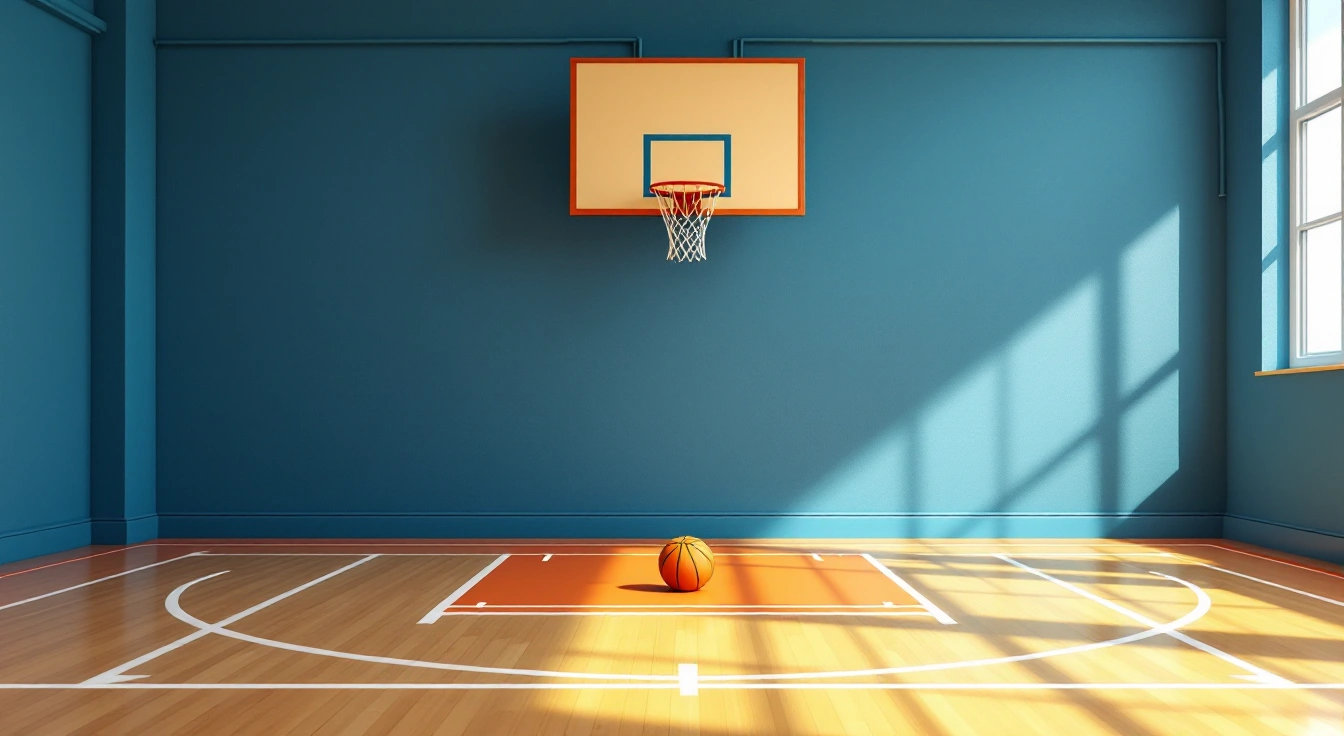
Basketball drills for 5 year olds should make one instruction easy to try, then let the adult see whether the group is ready for another. Use movement, gentle sends and clear turns before asking for a continuous dribble or a running shot. Age is a route to examples, not proof of a child’s skill.
Keep the ball manageable, the target reachable and the waiting route outside play. The activities below add simple choices to rolling and movement without elimination. They are original examples for adult coaches and parents. The NBA/USA Basketball published age tables do not establish five-year-old equipment or workload rules, and every time below can be shortened or omitted under the program’s supervision.
The NBA/USA Basketball participation table begins at ages 7–8. It does not prescribe a session length for five-year-olds; use the brief turns below as adjustable examples.
On this page
Group and equipment checks
Before the session, agree the adult handover and stop cue. Use a clear dry surface and flat markers that do not move underfoot. Keep spare balls beside an adult. A child who has not yet learned to stop in the area should use a no-ball or still version, with help from the supervising program rather than a faster route.
Rolling and catching game
- Goal: Send to a waiting partner, then prepare to receive.
- Readiness: Can track a slow ball on the floor.
- Players: Pairs with adult help as needed.
- Space: Short straight lanes kept apart.
- Equipment: One suitable ball per pair.
- Editable example time: 3 minutes, pause between exchanges.
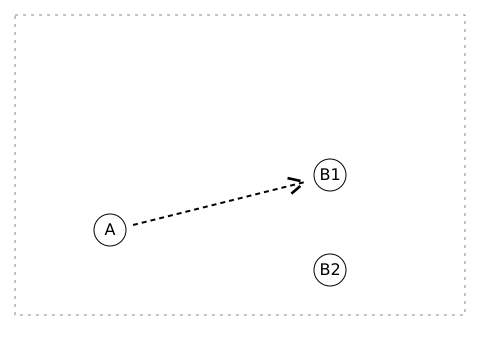
A rolls to ready receiver B along the dashed route. Keep the roll gentle and wait for control before returning it. B1 and B2 are alternative spots for the same receiver B.
Solid arrows show player movement; dashed arrows show the ball. The dotted edge marks an illustrative work area, not regulation boundaries.
Step 1: A holds the ball until B shows a low two-hand target. A rolls gently toward those hands. B collects, looks at A and waits for a ready target before returning. An adult can be either partner when the exchange is new.
Step 2: After a few calm rolls, place two nearby target spots for B to choose before the send. A must see which target is ready. Keep both spots within a gentle roll, so choosing does not turn into a long chase.
Coach cue: Find the waiting hands, then roll.
Easier version: Hand over at close range and step back only when ready.
Harder version: Let B choose the receiving spot after A looks up.
Observe: Both partners wait for control instead of swatting the ball back.
Follow-the-leader ball control
- Goal: Copy a simple ball action without racing a partner.
- Readiness: Can watch an adult at a separate spot.
- Players: Small group with one adult leader.
- Space: Clear still spots or broad one-way route.
- Equipment: One manageable ball per worker if available.
- Editable example time: 3 minutes, one action at a time.
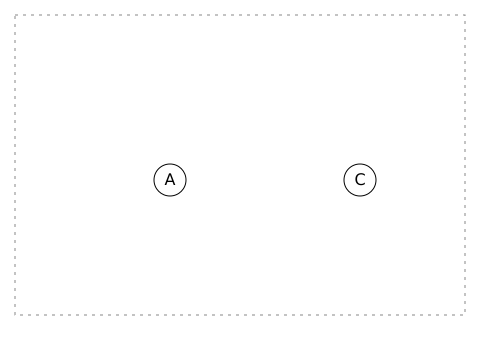
C is the adult model and A copies the held-ball action at a separate spot. No travel or throw is shown. Treat a later single bounce and catch as its own short action, then reset.
Solid arrows show player movement; dashed arrows show the ball. The dotted edge marks an illustrative work area, not regulation boundaries.
Step 1: The adult models a held-ball action, such as passing it gently from hand to hand. The group copies at separate spots. Add a careful set-down and pickup only if the floor area stays clear of rolling balls.
Step 2: For a group ready to bounce, show one bounce and a catch as a separate action. Stop and reset before the next copy. A catch ends that teaching turn; it is not presented as a continuous legal game dribble.
Coach cue: Copy one small action with control.
Easier version: Use empty hands to copy the arm movement.
Harder version: Let the adult choose between a held transfer and one controlled bounce.
Observe: The group can see the action and reset without a scramble.
Movement and target game
- Goal: Walk to a clear spot before sending a ball.
- Readiness: Can follow the stop cue with or without a held ball.
- Players: One mover at a time in each lane.
- Space: A short approach with a separate waiting area.
- Equipment: A ball and broad reachable floor target.
- Editable example time: 4 minutes, rotate after one attempt.
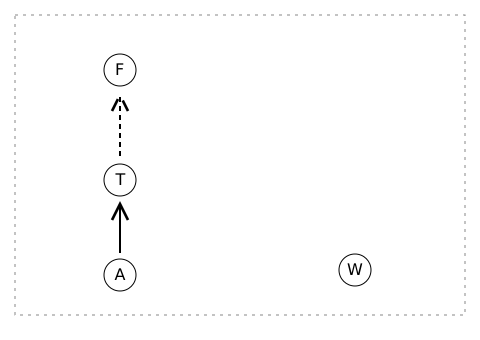
A carries the ball to stop spot T, then rolls toward floor target F along the dashed line. W waits outside the route. The solid walk and dashed roll are separate actions; the adult controls collection.
Solid arrows show player movement; dashed arrows show the ball. The dotted edge marks an illustrative work area, not regulation boundaries.
Step 1: A carries the ball to T, stops and sees the floor target. The adult waits for still feet before asking for a gentle roll. The next player remains outside the route and enters only after collection.
Step 2: Keep the carry and send as separate tasks at first. If A rolls while still walking into the target, remove the approach and return to a still send. The walk is an authored activity, not permission to travel with a held ball in a game.
Coach cue: Stop at the spot before you send.
Easier version: Begin beside the target with no approach.
Harder version: Offer two clear floor targets and name one before the walk.
Observe: A stops after the walk, then sends the ball without a rush.
Simple partner activity
- Goal: Share one ball with a clear turn and a catchable return.
- Readiness: Can receive a gentle two-hand send.
- Players: Child and adult or supervised pair.
- Space: Close open lane away from faces and obstacles.
- Equipment: One soft suitable ball.
- Editable example time: 4 minutes with brief pauses.
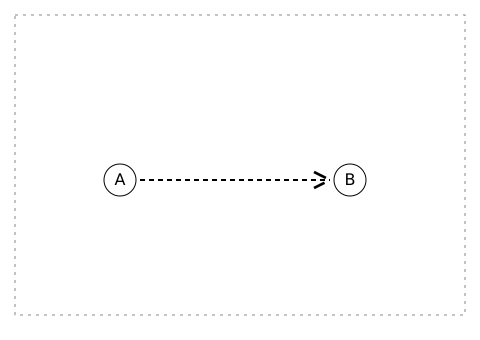
A and B face across the passing gap. The dashed route starts only when B is looking with hands ready. Hold the catch before returning; use a roll if the throw is too difficult.
Solid arrows show player movement; dashed arrows show the ball. The dotted edge marks an illustrative work area, not regulation boundaries.
Step 1: A sends a gentle chest-height ball only after B is looking and ready. B catches and holds it long enough to find A’s target. Keep the distance short, and let an adult make the return easy to receive.
Step 2: If a throw is hard to catch, change to a roll without calling that a failure. The pair still practices readiness and sharing. Later let the receiver step to a nearby clear spot before the pass, with no defender.
Coach cue: A useful pass is one your partner can catch.
Easier version: Roll along the floor to still hands.
Harder version: Use a short slow side move by the receiver.
Observe: The sender looks at the actual target before releasing.
Two-color stop choice
- Goal: Notice an adult cue while keeping a clear route.
- Readiness: Understands the one-way walking route.
- Players: One moving player per lane with adult viewing.
- Space: Two visible spots at a short lane’s end.
- Equipment: Flat markers; optional held ball.
- Editable example time: 3 minutes, use no ball first.
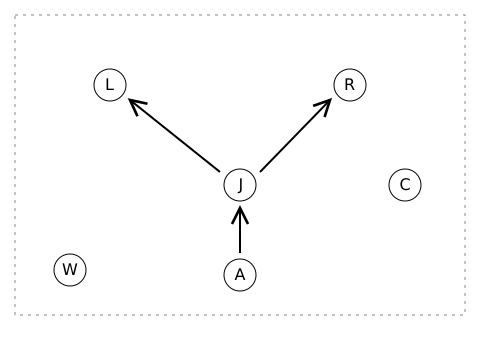
A chooses the adult’s named left or right stop marker, L or R. J is the branch point, C the adult cue giver and W the waiting player. Give the cue before A starts walking.
Solid arrows show player movement; dashed arrows show the ball. The dotted edge marks an illustrative work area, not regulation boundaries.
Step 1: Before A begins, the adult names or points to one of two spots. A walks there and stops. Keep the two choices visible and easy to tell apart. The next player waits outside the lane until A returns.
Step 2: Add the held ball only when the no-ball route stays calm. A player can point to the target before moving if the choice needs more time. Do not add a late signal that forces a sudden turn into another person.
Coach cue: See the choice before you start.
Easier version: Use one destination for the whole round.
Harder version: Give the cue after one slow step, with plenty of clear space.
Observe: A notices the signal and stops inside the named area.
Close target turn-taking
- Goal: Take one controlled attempt and clear for the next person.
- Readiness: Can wait at a spot and follow the collection cue.
- Players: Small group with an adult controlling the ball return.
- Space: Reachable target with a separate side exit.
- Equipment: Stable permitted target and suitable ball.
- Editable example time: 4 minutes, one attempt per turn.
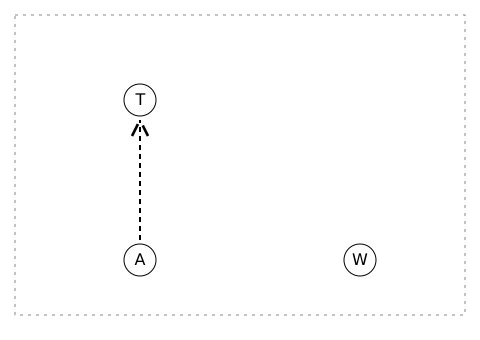
A starts still near target T; W waits off the sending line. The dashed arrow is the gentle send. A leaves by the side while the adult retrieves, before W takes the next turn.
Solid arrows show player movement; dashed arrows show the ball. The dotted edge marks an illustrative work area, not regulation boundaries.
Step 1: Use a low approved target or floor target selected by the program. A begins close, makes a gentle send and stays clear while the adult retrieves. The next person waits until A has left by the side route.
Step 2: Move the start to fit the actual group instead of asking everyone to throw farther. No child is eliminated for a miss. An adult can offer another calm attempt later while keeping the turn order clear for everyone.
Coach cue: Send calmly, then make room for the next turn.
Easier version: Use a floor roll to a broad target.
Harder version: Let A choose between two nearby targets before the turn.
Observe: The group uses the same start and exit each time, with a clear send in between.
When to shorten or change an activity
Watch the part that stops the turn from working. If the group can roll but cannot wait for the return, keep the roll and make the turn shorter. An adult can model the waiting hands between attempts. Do not add a second ball to remove the pause when it would create two crossing routes.
If a movement game leads to repeated collisions or loose-ball chases, stop all players before resetting the space. Use a still copy task while the adult restores the lane. A child who did not understand the route needs another view of the start and finish, not a louder or faster instruction.
For a partner who can do the task easily, add one small decision. They might choose between two nearby target spots while the other partner keeps the same gentle roll. Keep the same ball when you change the distance or cue. The pair should still be able to tell what makes the next turn useful.
If a child prefers to watch one turn, follow the program’s supervision arrangements and offer a clear way to rejoin. Do not use public comparisons or a penalty to force the attempt. A familiar task with an adult partner can be the next step when the group version feels too busy.
Use the final turn to return to a calm action, such as a controlled roll or a no-ball stop. Then collect equipment before starting the handover. A session that ends early can still give the adult a useful observation. The schedule is a planning aid rather than an obligation to fill time.
Record the action you would keep next time and the one setup change that might help. “The target was too far away for a gentle roll” names a task condition. It does not label a child’s ability or promise what the next session will produce. Keep those notes at group level and outside this website.
Put these activities into a practice
Choose two or three activities rather than run the whole page in one session. An authored 20-minute example uses 3 minutes of rolling, 3 of copying a held-ball action, 2 for water, 4 for a movement-and-target task, 4 for a partner exchange, 2 for a familiar repeat and 2 for a quiet close. The total includes settling and can be shortened.
Do not use the schedule as an official five-year-old participation limit. A target hit or a fast finish is not the only useful observation. Notice whether the group can wait for ready hands, keep its route and hear the shared stop cue.
FAQ
When should an adult shorten an activity?
When the group repeatedly loses the route, stops listening to the simple cue or spends most of the turn chasing balls. Shorten it before adding another rule. A still familiar action can replace a moving one. Finishing every example minute is less useful than a calm task the adult can supervise.
What if some children can dribble and others cannot?
Keep a shared goal with two versions. One worker can use a single bounce and catch while another keeps a brief live dribble. Both practice control and a deliberate stop. Do not label the versions publicly as good and bad groups or make a faster player’s pace the requirement for everyone.
Should the group play elimination games?
These examples keep everyone in the rotation. A miss does not remove a child from the next turn. If the space fits fewer active players, use brief fixed turns and a clear waiting job rather than an elimination contest. The adult should know who enters next before the ball moves.
Can an adult use a regulation basket for every task?
A fixed high basket is not required here. Use a reachable approved target or a no-hoop version when the equipment does not fit the activity. The program’s rules and equipment instructions still apply. Do not ask for a strained throw merely to make a beginner lesson resemble an adult game.
Choose the next coaching task
Youth Basketball Tips · https://youth-basketball-tips.com/youth-basketball-drills/basketball-drills-for-5-year-olds/