
Youth basketball drills
Basketball drills for 8 year olds: a coach’s starter session
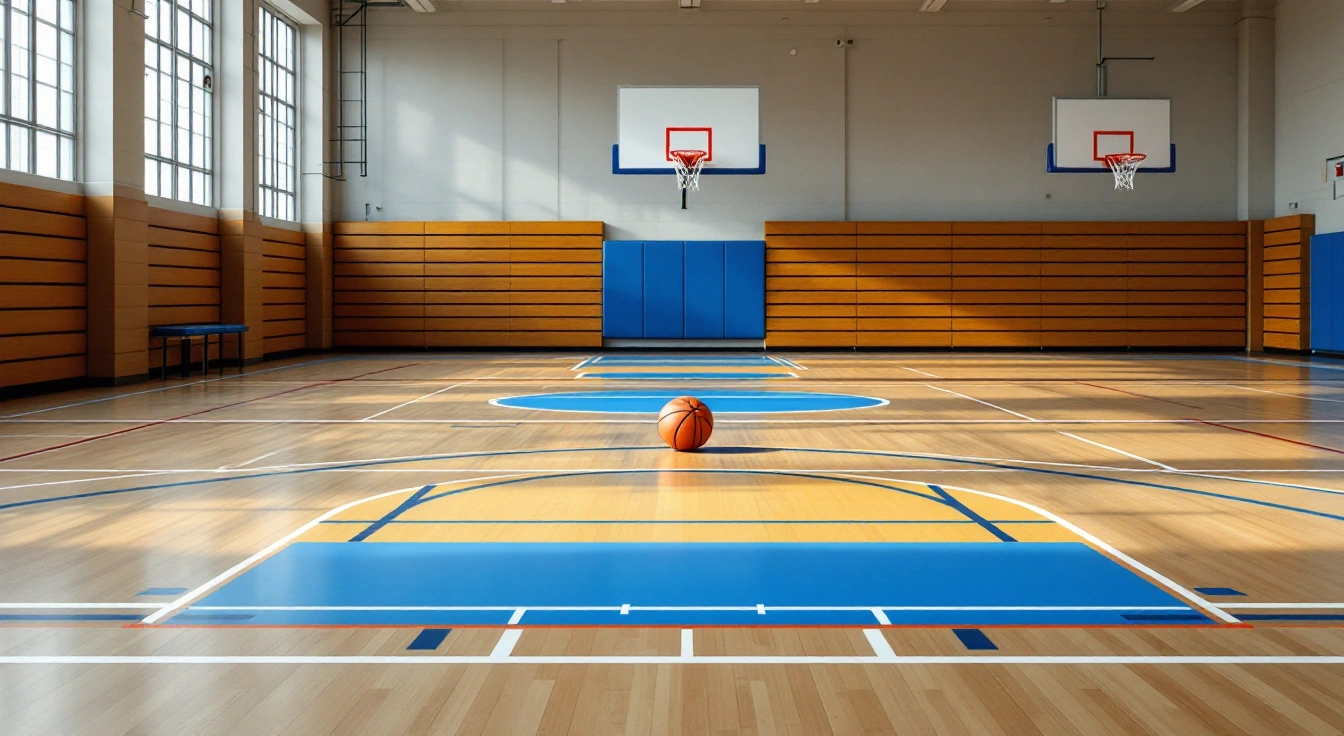
Basketball drills for 8 year olds need to fit a mixed-ability group rather than assume everyone can already dribble and shoot. These original activities keep one shared goal while offering a slower or simpler version. The adult watches control and a useful decision, not a public ranking of children.
Start with a controlled stop, add a ready receiver and then offer a small game with a visible pass option. Keep the basket and ball appropriate to the program. The NBA/USA Basketball ages 7-to-8 chart supplies labeled equipment and defensive recommendations, not proof of any individual’s readiness. All drill timings, player counts and rotation choices below are authored examples you can edit.
The NBA/USA Basketball ages 7–8 chart has its own equipment and defensive recommendations. Check those before using the basket or adding pressure.
On this page
Group and equipment checks
Confirm the venue’s supervision and adopted rules. The named youth chart recommends player-to-player defense and no stealing from the dribbler for this age group. Check local adoption before choosing the live version of any game. Keep working lanes apart and waiting spots outside the shot route. A fixed high basket can be replaced by a reachable target for a teaching task.
Set up a mixed-ability group
- Goal: Give two versions of the same control task.
- Readiness: Can understand a shared stop cue.
- Players: Pairs at separate clear spots.
- Space: Still spots with clear collection room.
- Equipment: One ball per pair if possible.
- Editable example time: 3 minutes, swap working and watching jobs.
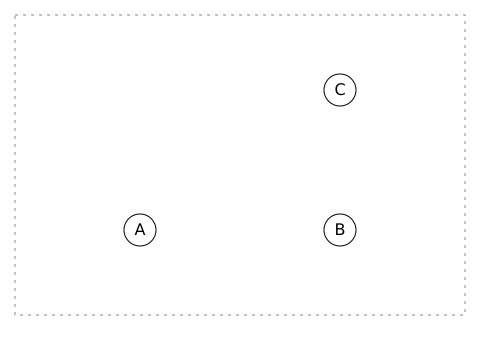
A bounces and catches while partner B watches whether the return stays within reach. C is the adult observation spot. Swap A and B before choosing a longer live bounce; both versions use the same stop cue.
Solid arrows show player movement; dashed arrows show the ball. The dotted edge marks an illustrative work area, not regulation boundaries.
Step 1: Ask A to make one bounce and catch, while B watches whether the ball returns within reach. If A can control that turn, allow a brief live bounce. Both versions end with the same deliberate stop cue.
Step 2: Exchange jobs before offering a harder version. The adult lets each player use the task that remains controlled, without naming strong and weak groups. Keep the observer’s comment about the action, not the person.
Coach cue: Stop on purpose, whichever version you use.
Easier version: Hold and gently set down the ball at the cue.
Harder version: Keep the dribble live through a brief eyes-up cue.
Observe: Each participant can end the chosen version calmly.
Control-and-stop activity
- Goal: Keep a moving ball inside a known lane.
- Readiness: Can manage a short still dribble.
- Players: One mover and one waiting partner per lane.
- Space: Short one-way path and separate return.
- Equipment: One ball and a turn spot.
- Editable example time: 4 minutes, exchange after each trip.
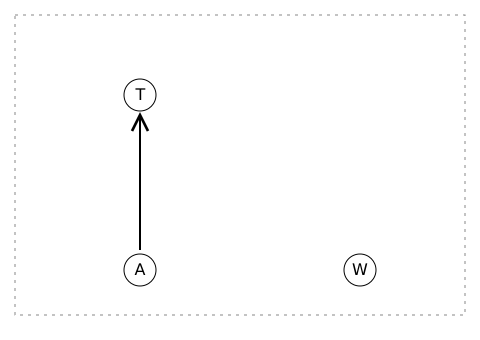
A dribbles toward T, gathers at the early stop cue and looks back toward the adult. W waits outside the active lane. The return uses the clear side route after the stop.
Solid arrows show player movement; dashed arrows show the ball. The dotted edge marks an illustrative work area, not regulation boundaries.
Step 1: A walks with a dribble toward T. The adult calls the stop early enough to avoid a rushed turn. A gathers the ball, stays balanced and looks back toward the adult before returning by the separate route.
Step 2: After a calm trip, use the other hand on the next turn. Do not change hand, pace and route together. If stopping produces a chase, return to a shorter still task and keep the same cue.
Coach cue: Keep the ball with you when you stop.
Easier version: Walk with a held ball, labeled as a movement exercise.
Harder version: Choose between two nearby stop spots before starting.
Observe: The gather leaves a balanced legal next action under the program’s rules.
Partner passing with movement
- Goal: See a receiver arriving at a clear target.
- Readiness: Can complete a gentle still exchange.
- Players: Pairs with an adult checking feed lanes.
- Space: Short side route into an empty spot.
- Equipment: One ball and two flat receiver markers.
- Editable example time: 4 minutes, switch passer and receiver.
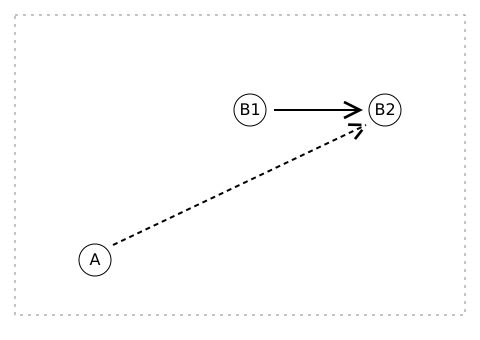
B walks from B1 to B2 along the solid line and shows hands. A sends the dashed pass toward the arriving target, then the turn ends on the catch. Restore the spots before exchanging jobs.
Solid arrows show player movement; dashed arrows show the ball. The dotted edge marks an illustrative work area, not regulation boundaries.
Step 1: B walks from the first marker to the second and shows hands. A waits until the target is visible, then passes toward a catch B can control. End the turn on the catch instead of racing into another pass.
Step 2: Restore the starting spots and exchange roles. A late or high pass calls for a shorter slower route. On a later turn, let B pause before moving so A must read the start rather than release on a fixed count.
Coach cue: Find the target that is there now.
Easier version: Keep B still at the second marker.
Harder version: Let B choose which of two nearby spots to use.
Observe: The pass reaches the moving receiver without a jump or a turn backward.
Close-range shooting game
- Goal: Take a calm attempt and share the collection route.
- Readiness: Can hold the ball and follow the basket turn order.
- Players: Three with one active shooter.
- Space: Close starting spot plus side exit and waiting spot.
- Equipment: One ball and suitable basket or target.
- Editable example time: 4 minutes, rotate after one attempt.
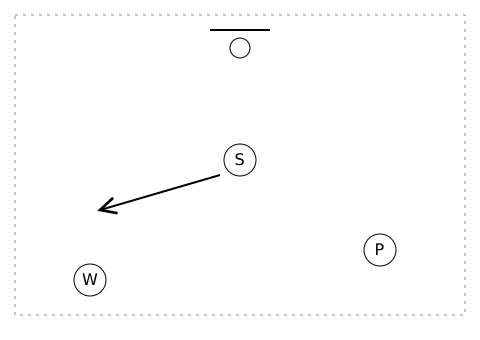
S takes a close controlled shot and clears by the solid side exit. P collects only after the landing area is clear; W stays outside that return route until collection is complete.
Solid arrows show player movement; dashed arrows show the ball. The dotted edge marks an illustrative work area, not regulation boundaries.
Step 1: S starts close to the target and makes one controlled attempt. P waits outside the landing area and returns the ball after S clears by the side. W enters only after that collection is complete.
Step 2: Let the group work toward repeated calm turns rather than eliminate a player for a miss. If the release needs a large heave, use a nearer or reachable target. The group can keep the same rotation without a regulation-height shot.
Coach cue: Finish the attempt and leave room for the next turn.
Easier version: Use a floor target and a gentle roll.
Harder version: Add a short pass before the close attempt.
Observe: The catch, shot and exit stay distinct enough for an adult to see.
Small-sided decision game
- Goal: Notice an open teammate when one route is blocked.
- Readiness: Can catch and see a nearby pass option.
- Players: Two attackers and one shadow defender.
- Space: A clear small area with a visible target.
- Equipment: One ball and optional basket.
- Editable example time: 4 minutes, end after one decision.
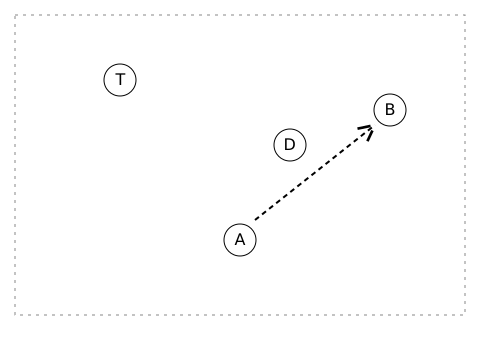
A starts with a route toward T and a pass to B. D closes one choice slowly without stealing. The dashed line is one possible pass, not a command to use it when D covers it.
Solid arrows show player movement; dashed arrows show the ball. The dotted edge marks an illustrative work area, not regulation boundaries.
Step 1: Give A a clear pass to B and a route toward a target. The defender closes one option at walking pace without stealing in the first version. A chooses the open route or pass and stops the turn after that action.
Step 2: Rotate the defender as well as the first ball handler. Check the adopted restrictions before allowing an interception. A smaller no-hoop game can end at B’s catch rather than add a difficult finish.
Coach cue: See which route remains open.
Easier version: Tell A which option will be closed.
Harder version: Let the shadow defender choose slowly after the start.
Observe: The decision follows the visible space rather than a forced instruction to shoot.
Pass, leave and refill
- Goal: Keep one passing window after a short cut.
- Readiness: Can follow a three-player turn order.
- Players: Three attackers without defense first.
- Space: A broad triangle away from the shot route.
- Equipment: One ball and three flat spots.
- Editable example time: 4 minutes, rotate first passer.
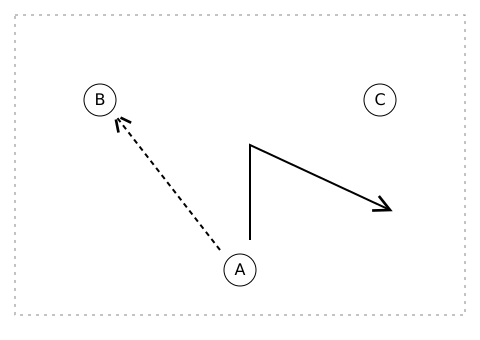
A passes to B, then follows the solid cut through the middle to the empty outside side. C fills A’s old space only after A clears. B waits for the next visible target.
Solid arrows show player movement; dashed arrows show the ball. The dotted edge marks an illustrative work area, not regulation boundaries.
Step 1: A passes to B, walks through a clear middle and exits to the empty outside area. C waits until A clears before filling the space left behind. B keeps the ball until the next receiver is visible.
Step 2: Pause to name who now offers the outside pass. Do not require B to return to the cutter. The first lesson is the empty space and timing, before adding a defender or a faster cut.
Coach cue: Leave a space someone can use.
Easier version: Walk the pattern with no ball.
Harder version: Add one passive adult who closes the cut window.
Observe: Two players do not enter the same outside spot at once.
One-basket rotation with a no-hoop station
- Goal: Keep turns short when basket access is limited.
- Readiness: Understands the shot and passing tasks separately.
- Players: Two small adult-supervised groups.
- Space: One basket area and one separate passing space.
- Equipment: One ball per active station.
- Editable example time: 6 minutes, exchange areas halfway.
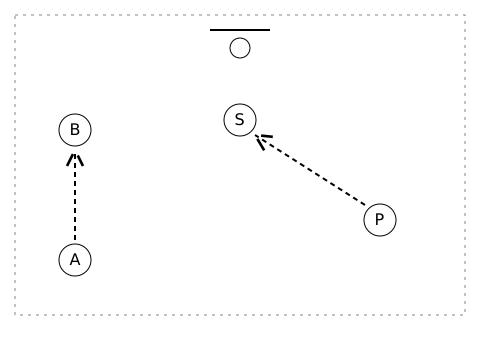
P and S share the basket station; A and B use the separate receiving lane. Both dashed routes stop before the groups walk around the outside to swap. Keep the left lane clear of rebounds.
Solid arrows show player movement; dashed arrows show the ball. The dotted edge marks an illustrative work area, not regulation boundaries.
Step 1: Put one group at the close target while the other uses still partner receiving. Explain the exchange route before starting. The passing space must be outside the rebound and shot exit, not behind the basket collector.
Step 2: At the midpoint, stop both balls and walk groups through the agreed route. Keep the cue in each station the same after the exchange. If one adult cannot supervise both spaces, use one station at a time with brief fixed turns.
Coach cue: Move groups only when both tasks are still.
Easier version: Use one shared passing station.
Harder version: Add the moving receiver at the no-hoop station after the swap stays clear.
Observe: Every player gets a useful task without a crossing route or long idle queue.
Put these activities into a practice
Make the drill easier by reducing the decision, not by removing the child from the group. A still catch and a moving catch can share the same target cue. Add only one demand after a calm turn: a longer pass, a moving receiver or a visible defender choice.
An authored 24-minute block could use 4 minutes each of control-and-stop, partner movement and close shooting, 2 for water and station reset, 6 for the one-basket exchange and 4 for a small decision game. Shorten the block as the group or program requires. Keep a brief anonymous observation about whether the passing windows stayed clear, with no child scores or promises of improvement.
FAQ
Should all eight-year-olds use the same version?
No. The shared goal can have a still and a moving version. Choose by the action the player can control today and the program’s rules. A beginner should not have to copy another player’s speed to stay included. Keep the cue the same and exchange versions without public ability labels.
Can the game use a defender who steals?
Check the actual age-group rule before adding that action. The cited NBA/USA Basketball ages 7-to-8 guideline does not allow stealing from an active dribbler. A shadow defender can close a route without a steal. A teaching game should not quietly override the defensive restrictions the program adopted.
What if only one basket is available?
Use a separate no-hoop passing or ball-control task if an adult can supervise both areas. Stop both groups before exchanging stations and keep the route away from rebounds. If that is not possible, use one activity with short fixed turns. An extra active ball is not a solution to a crowded rim.
When is a harder version useful?
When it adds a clear decision to a task the group can already manage. A single made shot or one fast trip is not enough by itself. State what changes and what stays familiar, then observe the same cue. Return to the simpler version if the new demand removes control.
Choose the next coaching task
Youth Basketball Tips · https://youth-basketball-tips.com/youth-basketball-drills/basketball-drills-for-8-year-olds/