
Youth basketball drills
Basketball dribbling drills for youth practice
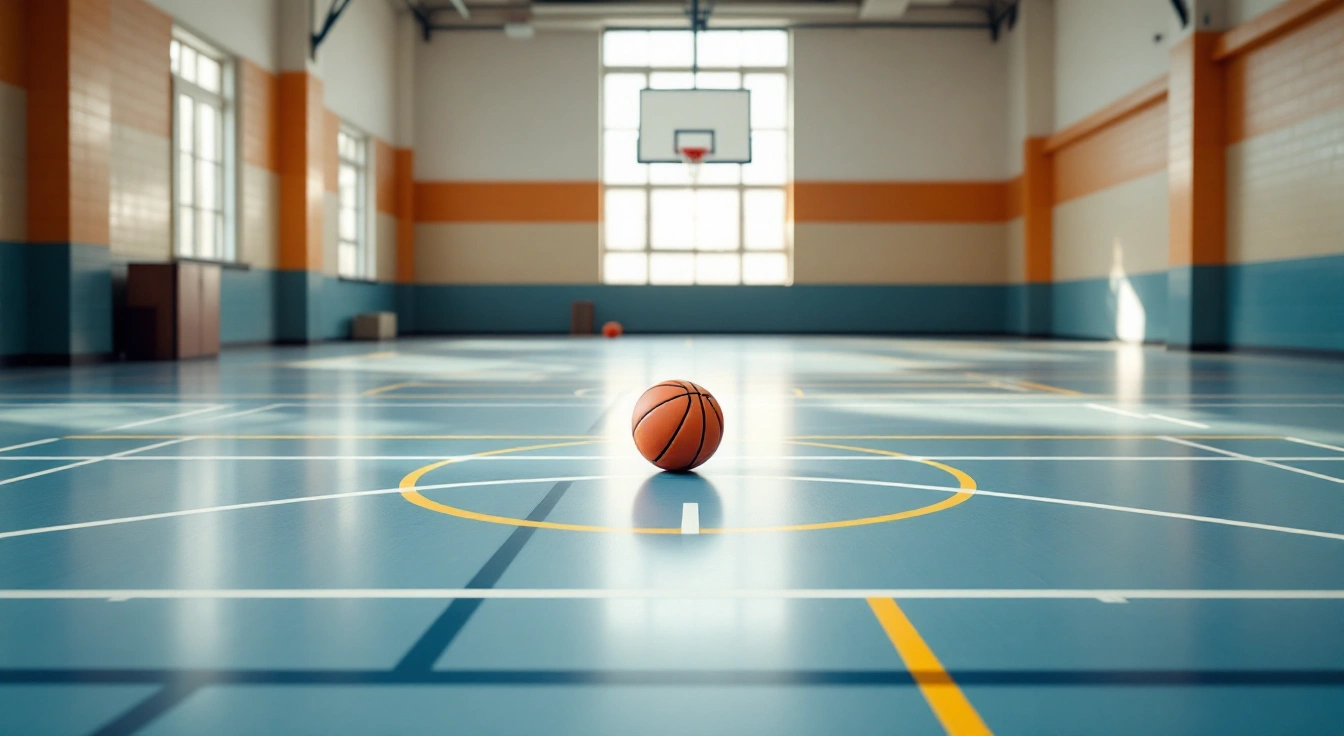
Basketball dribbling drills should answer a control question before adding speed. Use these five original activities to separate a still bounce, a moving route, a hand switch and a response to a visible cue. An adult can then choose the task the group actually needs.
Start at separate floor spots and keep the first route short. Let the player control the bounce, notice one cue and stop before another player enters. Add just one new demand at a time. All times and group sizes below are editable examples; they are not official workload guidance, and none of the activities needs a blindfold or a child performance profile.
Ball handling and footwork sit within the USA Basketball foundational curriculum. These activities separate still control from travel so a missed cue has a specific correction.
On this page
Group and equipment checks
Choose a dry clear floor where the bounce and return routes stay apart. Players need to understand the stop cue before any moving version. Use the program’s ball-size guidance and check the actual ball’s care instructions. A stationary task can work with a ball shared by a pair, with a short exchange after each turn.
Stationary control drill
- Goal: Keep the bounce near the body with either hand.
- Readiness: Can stand at a spot and stop with the ball.
- Players: One worker per spot; pairs may share.
- Space: An arm’s reach plus ball-retrieval space between spots.
- Equipment: One ball per worker.
- Editable example time: 3 minutes, brief turns with pauses.
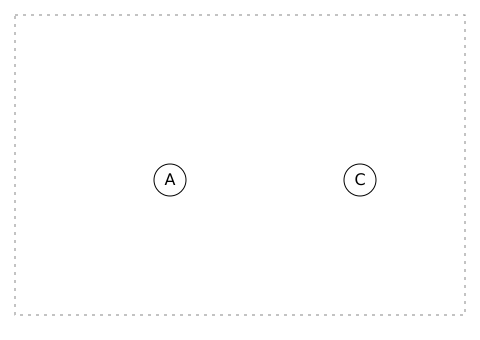
A stays at the ball-control spot while C, the adult, watches the bounce return. There is no travel arrow: catch and reset first, then try a short continuous bounce in the same clear space.
Solid arrows show player movement; dashed arrows show the ball. The dotted edge marks an illustrative work area, not regulation boundaries.
Step 1: Ask A to make a few calm bounces with one hand, catch the ball and reset. The catch ends that teaching turn. Try the other hand after a pause, keeping the starting spot and pace familiar.
Step 2: Next keep the bounce live for the short turn. The adult watches whether the ball stays close enough for a controlled stop. A player who has to chase it returns to the version with a reset.
Coach cue: Let the returning ball meet a ready hand.
Easier version: Allow a catch after every bounce.
Harder version: Keep a short continuous dribble before the stop.
Observe: A can end deliberately rather than only when the ball escapes.
Moving with eyes up
- Goal: Notice a visible cue while walking with a dribble.
- Readiness: Can bounce in place and look briefly away from the ball.
- Players: One moving player in each lane.
- Space: Clear out-and-back lane; adult visible at the end.
- Equipment: One ball and two floor spots.
- Editable example time: 3 minutes, one trip then exchange.
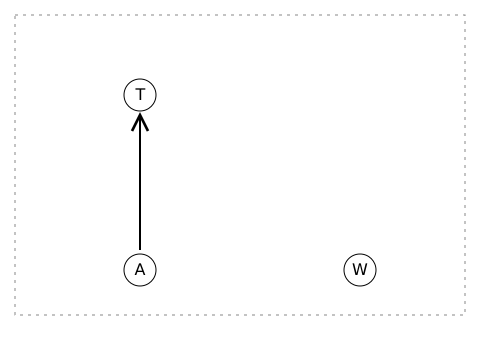
A dribbles toward turn marker T while the adult gives a visible cue. W waits beside the lane, outside the approach and return. Stop at T before walking back by the separate side route.
Solid arrows show player movement; dashed arrows show the ball. The dotted edge marks an illustrative work area, not regulation boundaries.
Step 1: A walks toward T while the adult shows a large left or right hand cue. A says the direction without taking the eyes away from the floor for a long period. Keep other players out of the return route.
Step 2: At T, A stops and returns outside the active lane. Give the cue earlier if the player cannot see it in time. Do not hide the ball or ask for closed eyes while moving.
Coach cue: See the cue and keep the route.
Easier version: Show the cue during a still bounce.
Harder version: Let the adult change which direction is shown.
Observe: A responds without a loose-ball chase or crossing into another lane.
Change-hand and change-direction drill
- Goal: Transfer control before using a broad turn.
- Readiness: Can use each hand for a brief still turn.
- Players: One active player with a waiting partner.
- Space: One wide turning area and separate exit.
- Equipment: One ball and a flat turn marker.
- Editable example time: 4 minutes, alternate starting hand.
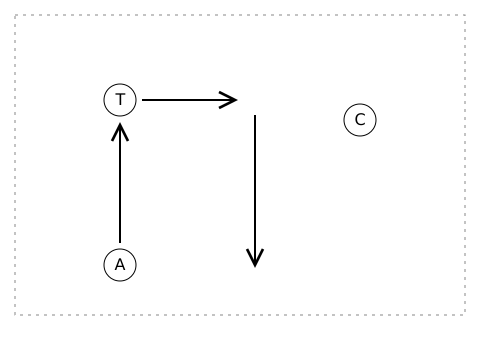
A first switches hands at the starting spot. For the moving version, follow the solid route to T, transfer before the broad turn and leave along the clear return side. C gives the cue from outside the route.
Solid arrows show player movement; dashed arrows show the ball. The dotted edge marks an illustrative work area, not regulation boundaries.
Step 1: Begin still and move one bounce across the front toward the other hand. Allow a deliberate catch after the transfer in the learning version. Once that is calm, keep the dribble live through the switch.
Step 2: Add a walk to the broad turn marker. Use the same transfer there, then leave by the clear return side. If the feet and ball rush in opposite directions, remove the walk and restore the still transfer.
Coach cue: Control the next bounce before moving away.
Easier version: Transfer with no travel and an allowed reset.
Harder version: Choose a left or right exit after the switch.
Observe: The new hand receives the ball close enough for the chosen route.
Reactive partner drill
- Goal: Read one partner cue instead of following a fixed route.
- Readiness: Can travel slowly without losing the ball at every cue.
- Players: Dribbler and adult or ready partner.
- Space: Two separate lanes with a clear viewing gap.
- Equipment: One ball.
- Editable example time: 3 minutes, exchange who gives the cue.
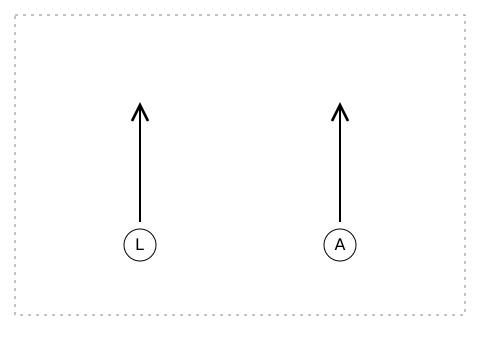
L supplies the direction cue from one lane; A dribbles in the parallel lane. The solid arrows show a shared direction without crossing the gap. A responds to the cue, not by chasing L.
Solid arrows show player movement; dashed arrows show the ball. The dotted edge marks an illustrative work area, not regulation boundaries.
Step 1: L walks slowly in one of two agreed directions while A dribbles in the other lane. A responds to L’s direction without chasing across the gap. Begin with a known cue and no attempt to steal.
Step 2: Pause after a short turn, then let L choose the direction. Keep the choice broad and early. If A follows a late feint into traffic, simplify the cue rather than call the mistake a speed problem.
Coach cue: Read a clear signal, then take the next step.
Easier version: A bounces in place and calls L’s direction.
Harder version: Let L choose when to stop as well as the direction.
Observe: A looks up briefly and still remains inside the working lane.
How to observe control and progress
- Goal: Use one honest group-level observation.
- Readiness: Group understands a familiar lane task.
- Players: Pairs with one worker and one watcher.
- Space: The same marked lane used for the first attempt.
- Equipment: One ball and adult timing choice.
- Editable example time: 4 minutes, equal short turns.
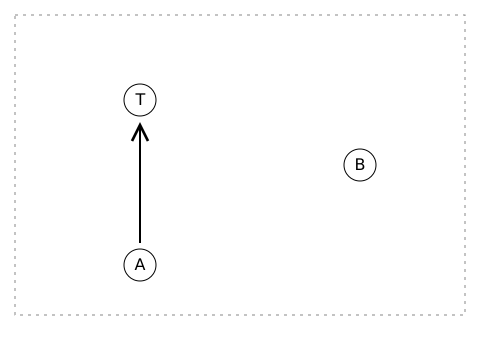
A repeats the route toward T while B watches the stop from outside the lane. B describes whether the ball was controlled at T, then swaps jobs with A under the same conditions.
Solid arrows show player movement; dashed arrows show the ball. The dotted edge marks an illustrative work area, not regulation boundaries.
Step 1: The adult chooses one visible action, such as stopping at T with the ball under control. A repeats the familiar route while B watches that action only. B describes the stop, not the player’s overall ability.
Step 2: Exchange jobs and repeat under the same conditions. Change only one demand for the next round, such as the hand or cue timing. Do not compare different routes as if they were the same measured test.
Coach cue: Describe the action you can see.
Easier version: Use a still bounce and deliberate catch.
Harder version: Add a known visible cue while keeping the stop task.
Observe: The observation names a task and condition, without child names or rankings.
Put these activities into a practice
Select the task that matches the first control problem. A group that cannot stop does not need a faster slalom. A group that controls the ball but never sees a cue can use the eyes-up version.
In an original short block, use 3 minutes of still work, 3 of one lane task and 2 for water and reset, then move to a passing activity. Those 8 minutes are a planning example, not a required daily dose. Keep the routes and observation clear before increasing difficulty.
FAQ
Should players dribble blindfolded to learn feel?
These activities keep the eyes open. A player needs to see the floor and other people while moving. A visible cue can practice looking away from the bounce without removing that information. Choose a still simpler task if the player cannot keep control while noticing the cue.
When should the adult add a defender?
After the player can manage the familiar route and the program permits the intended pressure. Begin with a shadow defender at walking pace and no stealing. Add a receiving outlet so protection has a purpose. A defender should create one readable choice rather than simply knock the ball away.
Choose the next coaching task
Youth Basketball Tips · https://youth-basketball-tips.com/youth-basketball-drills/basketball-dribbling-drills/