
Basketball skills
Hook shot and baby hook: a step-by-step teaching guide
A baby hook is a short hook shot released with one hand near the basket. Teach it as a controlled close finish, not a way for every beginner to shoot over contact. The useful first task is to keep the ball on the shooting side and release while balanced.
Start close to the basket with no defender. Establish a legal stop, turn the shooting shoulder toward the target and lift the ball on that side. Release with the shooting hand while the other hand leaves the ball. The starting movement is an authored teaching example. Check the adopted footwork rules before adding a step, a live dribble or a defender.
USA Basketball’s jump-hook lesson describes this close finish. Keep the footwork legal under your adopted code; NBA Rule 4 defines a pivot for the NBA examples here.
On this page
What a baby hook is
“Baby hook” describes a compact hook finish rather than a separate scoring rule. The USA Basketball jump-hook resource describes the shooting-side arm position and a close hook progression. No special point value or exception to traveling comes with the name.
It differs from facing the basket with a normal set shot. The body is partly turned and the release comes from the side. Don't encourage a long sideways fling. A nearby target lets the coach see the release without asking for extra force.
Set up balance and protect the ball
Begin at a close side spot, with the basket ahead of the shooting shoulder. Hold the ball under control and leave the landing area clear. The guide hand helps steady the ball before the release. It should not throw across the shooting hand.
Use the body as a position between the ball and a pretend defender. Do not teach protection as a push with the free arm. Keep the first attempts free of contact, so the player can learn where the ball travels.
Legal footwork and release
Walk the stop and turn without a shot. Name the planted foot and check it against the program's rule. A hook shot does not allow an extra step just because the basket is close. The NBA pivot definition is a labeled comparison, not a universal youth gather rule.
Then add the ball and a small upward release. Keep the action slow enough that an adult can see when the foot leaves and when the ball leaves. If the turn becomes a shuffle, return to a still hook rather than rehearse the mistake faster.
Work on both sides
Use a right-side release and then a left-side release from similarly close spots. The second side may need a shorter or simpler attempt. Don't make it a race to match the stronger hand's distance. Exchange turns with a partner waiting outside the landing path.
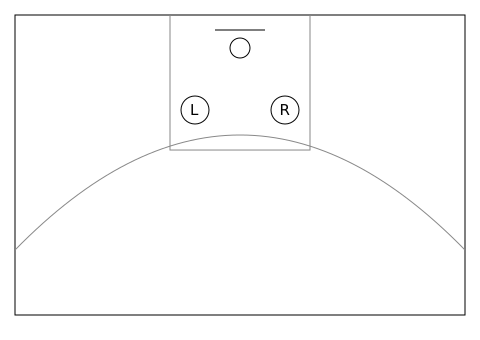
Common errors and a gentle progression
If the player twists away from the target, remove the step and reduce the task to a still release. For a guide hand that pushes across, watch a close attempt from the front. A ball that goes far past the basket calls for a closer spot and a softer finish.
Add one simple pass to the starting spot only after the still version is controlled. The receiver catches and stops before the turn. Keep the defender out until the player can identify a legal route and an open landing area. A hook shot is one choice near the basket, not a requirement to force an attempt through a crowd.
FAQ
Should every beginner learn the baby hook first?
Choose a finish that fits the player’s control and the program’s equipment. A close still shot may be a better start. Add the hook when the player can turn and release with room to land. The goal is a clear choice near the basket, not a required shot for every child.
Does the guide hand push the hook toward the target?
Use it to steady the ball before the release, then let the shooting hand finish. A second-hand push across the ball can change its path. Move close and watch one calm attempt before adding a moving catch or a defender.
Choose the next coaching task
Youth Basketball Tips · https://youth-basketball-tips.com/baby-hook.html