
Basketball plays and strategy
Pick and roll basketball: teach the screen and the choices
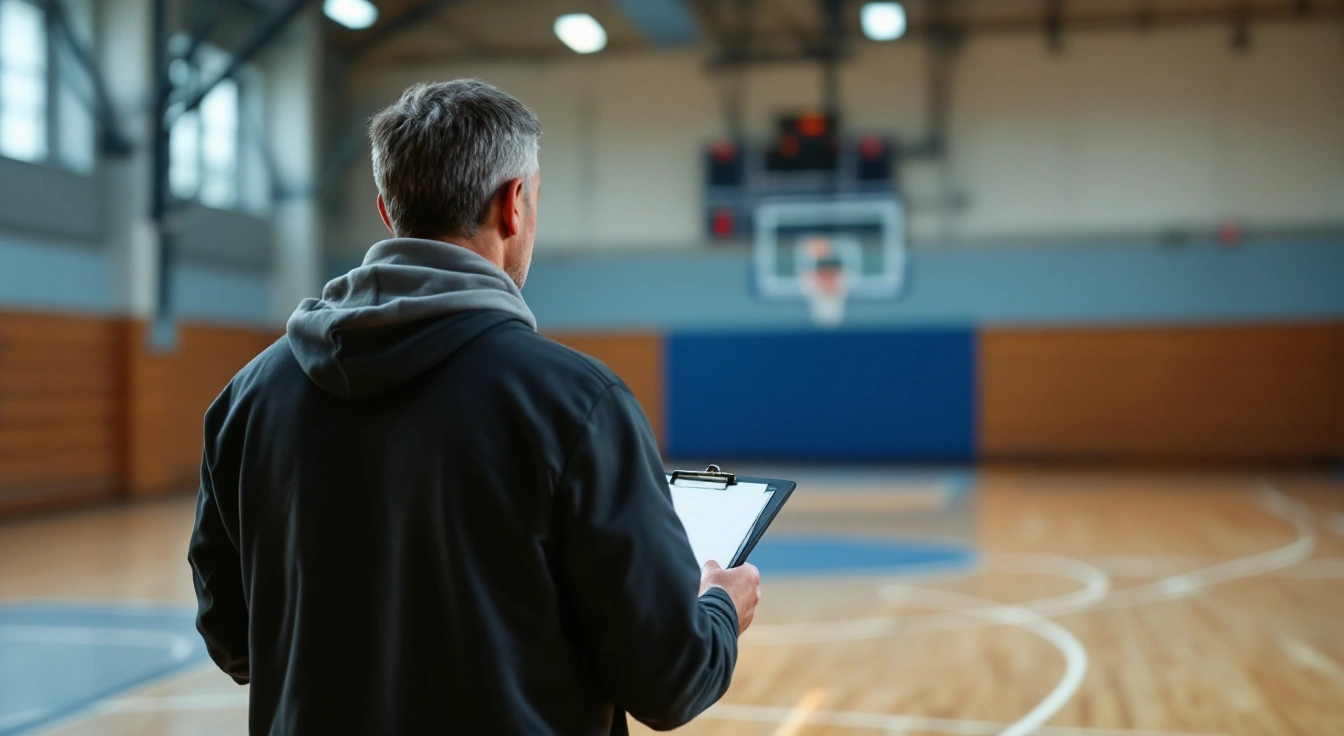
A pick and roll basketball action starts with a ball screen. The screener then moves toward the basket. Teach the screen's legality before its scoring options. A no-contact walk-through can show both players' routes without asking a beginner to absorb a collision.
Use this only where the program permits ball screens and the group is ready. Establish the screener's position, let the ball handler choose a clear route and release the screener into open space after the screen. A roll is a possible pass, not a command to force the ball between defenders. The original frames below are teaching options, not a universal coverage or youth rule.
NBA Rule 12 includes screening contact restrictions. Use those NBA examples to explain the gap and stop, then confirm that the youth program permits the screen before teaching it.
On this page
Readiness and a legal screen
Ask the organizer about age and competition restrictions. The NBA/USA Basketball youth 3x3 guidance limits ball screens for younger groups; that rule set is distinct from a five-on-five league. Do not assume that a screen allowed in an adult game is appropriate or permitted in your setting.
The NBA's Rule 12 contains the labeled reference for illegal contact by screening. A screen does not grant permission to move into the defender, extend a limb or push through contact. The exact position and time/distance tests belong to the adopted code, not a generic “feet still” slogan.
Begin without a defender. If a defender is later added, keep a visible gap and use walking pace. Stop before contact while explaining the first positions. A coach should not teach a legal screen by having players crash into an adult or teammate.
Starting positions
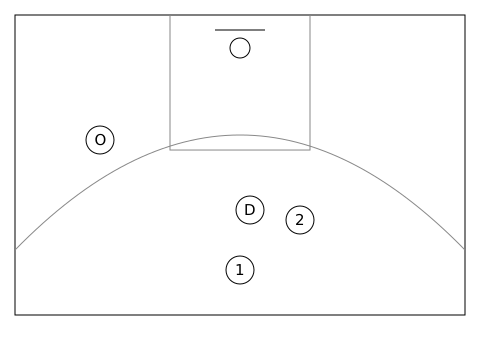
The ball handler first sees the screen and defender. The screener reaches the agreed position under the adopted rules before the ball handler uses the route. Keep the outlet away from both travel paths. Timing the start matters more than rushing toward the basket.
Use the screen with control
In this example, 1 walks toward the right-side opening after 2 is set. A defender walks the chosen response without contact. The ball handler keeps control of the ball. Keep the basket and outlet in view. Do not turn away from every receiver.
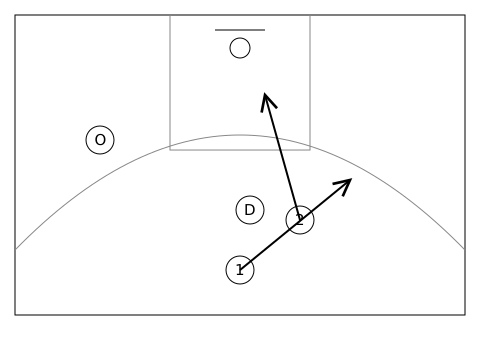
If the route closes, the ball handler can keep space and pass to the outlet. Don't grade the turn as a failure because no one reached the rim. The task is to recognize a clear next action while preserving legal movement.
Roll and passing options
The screener turns toward open space after the ball handler uses the screen. A pass is available only if the route and catch are clear. If a helper takes the roll away, an outside outlet may be the useful choice. Do not throw toward the rolling player simply because the action's name contains “roll.”
Let the receiver catch and stop in the first version. Add a finish only after the feed reaches a controlled spot with a clear landing area. The screener must not pull or hold a defender to make that route open.
Common defensive responses
| Walk-through response | What the ball handler reads | Teaching caution |
|---|---|---|
| Defender follows around | Space ahead and the roll window | No automatic pass |
| Defenders exchange assignments | Which receiver is actually free | Do not assume a size mismatch wins |
| Helper stays near the basket | An open outside outlet | No forced pass into the crowd |
| Two defenders approach the ball | A calm outlet route | Use only where double-teaming is permitted |
Scroll for more →
These are reading examples, not a complete defensive playbook. Tell the group the response before the first attempt, then let it vary slowly. If players cannot see the decision, remove one defender rather than add more options.
Teach with a no-contact walk-through
Before adding a live defender, ask the ball handler to point to a clear outlet away from the screen. Walk the route with the roll covered and leave that outlet open. The player can keep the dribble or use the outlet as the rules and space allow. Do not score the task solely by whether a pass reaches the roller.
Swap the visible passing window on the next walk-through. Ask the player which option changed and why. Keep the screener's route clear while discussing the read. This tests the decision in the example without asking anyone to learn the action through contact.
Start this lesson by walking the route with no ball. Add a ball but no defender. Then add one walking defender and a fixed outlet. End each attempt after the chosen pass. Rotate every player through ball handler, screener and receiver rather than assigning permanent jobs by height.
FAQ
Is standing still enough to make every screen legal?
No. The adopted code also governs position, contact and time or distance in particular situations. Use the actual rule before teaching the action. A no-contact route lets a beginner learn the idea without pretending that a still pose certifies the screen. Stop any example that relies on a collision.
Does the ball handler have to pass to the roll?
No. The roll supplies an option. A defender may close that route while leaving an outlet or another clear action. Teach the player to see the window and keep the ball if it is not there. A forced pass is not a successful reading just because it matches the planned arrows.
Choose the next coaching task
Youth Basketball Tips · https://youth-basketball-tips.com/pick-and-roll-basketball/