
Rules, signals and court dimensions
Basketball rules for beginners: a coach and parent guide
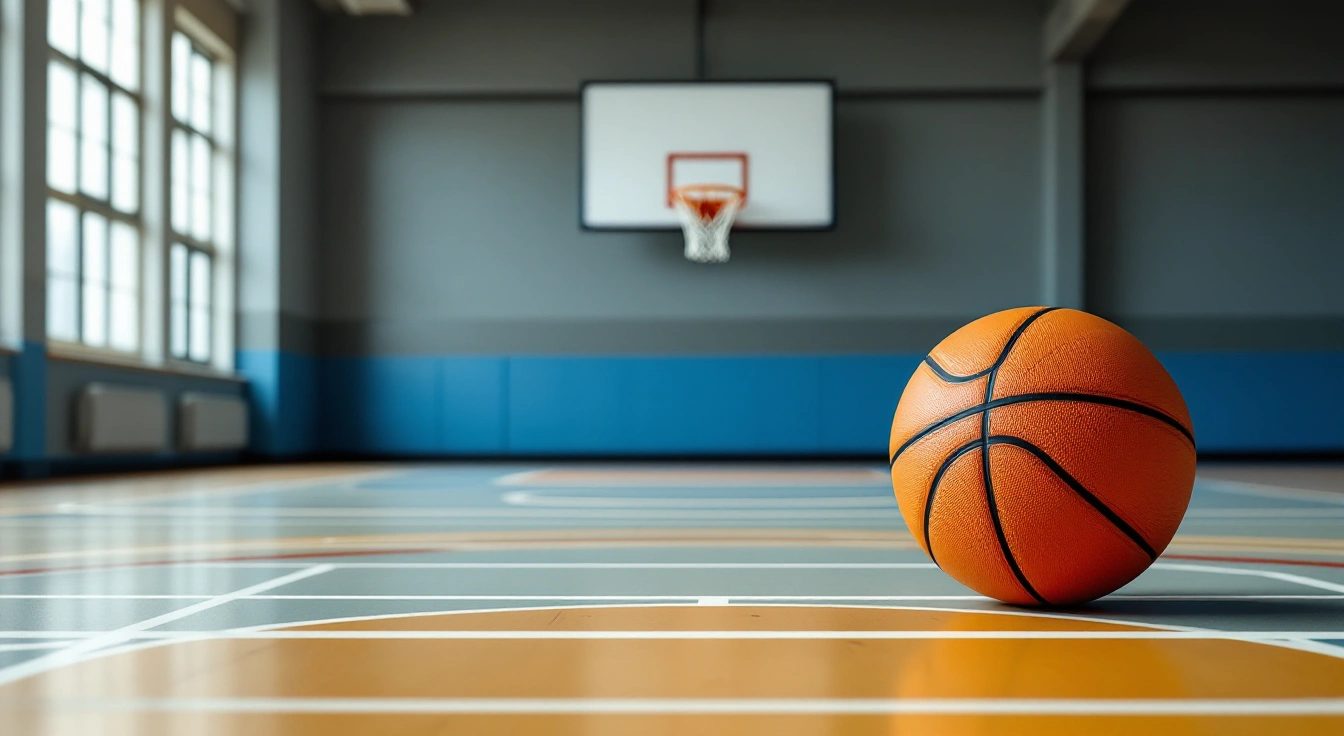
Basketball rules for beginners make more sense when a coach teaches the next decision, then names the rule behind it. Start with scoring, keeping possession and stopping when an official whistles. Ask the league which rules it uses. Check a time limit or restart spot before you teach it.
The basic task is to move the ball toward your basket with legal dribbling and passing, try to score, then defend without illegal contact. A violation stops play for a broken rule. A foul concerns illegal contact or conduct under the chosen code. Youth programs can modify equipment and defense as well as restarts. This is an adult teaching guide, with named reference rules and original practice examples rather than a substitute rulebook.
In the NBA code, Rule 10 covers violations and Rule 12 covers fouls and penalties. Use that distinction to explain the examples, then apply the code your league actually adopts.
On this page
Start with your league's rules
Ask which governing code the competition adopts and which local changes apply. A school, recreation program and informal game can handle the same stoppage differently. Don't combine an NBA travel explanation with a school throw-in location and call the result “standard youth rules.”
Write the adopted code and current season on your adult session sheet. Check the ball and basket, then the playing boundary, then ask about playing time, defense and substitutions. If you don't have an answer, mark it unknown and ask the organizer. A confident guess can confuse players who later hear a different instruction from an official.
For a first practice, teach the actions that remain useful across settings. A receiver can show a target, catch with balance and look toward an open teammate. A defender can stay between the ball and the basket without reaching across an opponent. The exact limits still come from the local rulebook.
Scoring and possession
A team's basket is the one it is trying to score in. Confirm which end is being used before the group starts. In a shared gym, a player may see several baskets and several sets of lines. Point out the correct basket and boundary rather than relying on “over there.”
Explain the difference between a field-goal attempt and a free throw. A field goal comes during play; a free throw is an awarded unopposed attempt. The NBA/USA Basketball ages 7-to-8 chart counts field goals as two points and does not use three-point scoring. That is a named youth recommendation, not a rule for every age or league.
Possession is about control, not merely touching the ball. A deflected pass may remain available for either side to collect, while a player holding the ball has clear control. Teach beginners to wait for the official's decision after a disputed ball rather than argue or pull harder.
Use an authored walk-through with two attackers and a passive defender. Let one attacker pass, then point out which team still has the ball. Roll it gently into a clear space and ask the group to wait while an adult explains the restart. The teaching goal is to recognize the situation, not to invent an official call for every loose ball.
Dribbling and traveling
Dribbling sends the ball to the floor while the player controls it. In the NBA reference definition, placing both hands on the ball or letting it come to rest ends the dribble. A beginner should not learn that a deliberate stop permits a fresh dribble whenever a pass is inconvenient.
Start with a still catch and a turn around a planted foot. Call that planted foot the pivot foot. A player's permitted movement depends on how control was gained and how the feet reached the floor. “You always get two steps” is too broad to teach as a universal rule.
For the NBA-labeled still-pivot example, the ball must leave the hand before the pivot foot lifts to start a dribble. A player who lifts that foot to pass or shoot must release before returning it to the floor. Use the local code for a real call, especially for a moving catch or gather.
An original slow teaching sequence is: catch while balanced, name the planted foot, turn to see a teammate and pass. Walk the action without a defender first. If the foot slides, return to a still catch. Don't add a fake defender who pushes or grabs the ball while a beginner is learning the stop.
Watch for the moment a dribble ends rather than count every foot movement aloud. If a player catches their dribble, their next choice can be a pass or shot, subject to the adopted rules. Tell them the useful next action instead of shouting only the name of a violation.
Fouls and legal contact
In the NBA rules, a personal foul means illegal contact with an opponent. Other foul types cover conduct or special cases. Teach players to move with control and leave room for others. A touch does not always lead to the same call. Do not promise that one stance can never cause a foul.
Teach on-ball defense at walking speed. A defender moves their feet to stay in the path and keeps hands out of the dribbler's body. The attacker keeps control without using a forearm to push the defender away. Stop the exercise before either player has to brace for contact.
For an introductory screen, remove contact entirely. Place the screener, show where the ball handler travels and let a defender walk around with space. A screen is not permission to step into someone at the last instant or extend an elbow. The exact legal positioning and time/distance tests need the adopted rulebook.
Avoid explaining fouls through punishment drills. A player who reaches can repeat the same containment task with hands held still and a slower dribbler. Ask what space the defender should protect. That turns the call into a teaching choice without claiming that the drill prevents injuries or guarantees clean defense.
Out-of-bounds and restarts
Identify the actual boundary line before play. In the NBA reference, a player touching on or outside the boundary is out of bounds. A ball's location and who last touched it also affect the decision. Don't treat a ball flying above the line as automatically out before it touches something that makes it out under the code.
A throw-in restarts play from outside the court. The official can designate a spot, and certain situations use different movement or location rules. Teach the inbounder to find an open receiver and keep the release inside the permitted time. Don't teach “you can run the baseline” for every restart.
For school games, read the current NFHS notes and the rulebook the school uses. The season notes correct some wording about the possession arrow. Use the current text to check a restart. A rule you recall from another code may not apply.
Use a clearly marked pretend sideline in practice. One adult hands the ball to the inbounder while a receiver walks into a passing window. The inbounder waits for a clear pass rather than stepping onto the playing area with the ball. Then exchange duties so every player sees both sides of the restart.
Common youth modifications
Youth guidance can change more than basket height. The NBA/USA Basketball chart for ages 7 to 8 specifies player-to-player defense and no pressing. The 9-to-11 chart also uses player-to-player set defense, with a limited pressing recommendation. These are source-specific guidelines; your program must confirm what it adopts.
Ask about equal playing time and substitutions before planning a game. A short teaching game can rotate all players in a clear order. That practice format is an authored choice, not proof that the competition uses the same substitution rule. Make the difference clear to assisting adults.
Don't add a shot clock, closely guarded count or backcourt limit just because an adult game uses one. If the program has not supplied a particular rule, treat it as unknown. You can teach looking up and moving the ball without inventing a countdown.
Court and signal references
After a whistle, teach the group to stop and look at the official. A gesture may identify a violation, a direction or a clock instruction. One visible arm position without the rest of the sequence may not explain the whole call. An adult can ask a calm rules question at the proper time rather than have children debate a signal.
For the next practice, choose one common stoppage and rehearse the useful response. A travel lesson can end with a balanced catch and legal pass. An out-of-bounds lesson can end with a clear receiving window. The best first basketball rules for beginners lesson is a small action that players can recognize and repeat in the program's actual setting.
FAQ
What should a coach teach after the first travel call?
Ask what happened before the feet moved. A still catch, a moving catch and a stopped dribble can require different explanations. Rehearse the actual situation slowly under the adopted code. Keep the next task small enough that the player can see the legal choice, rather than repeat a slogan about steps.
Should every youth game use an adult shot clock?
No. Ask the program whether it uses one and what rule it adopts. The absence of a clock does not prevent teaching a player to see an open teammate. Do not invent a countdown in practice and then describe it as the competition rule. Label a teaching constraint as your own example.
Can a coach use the floor's nearest line for a restart?
Use the spot the official designates under the applicable rules. Colored marks from another sport or ruleset can sit close to the correct location. A practice can use a temporary marker, but the adult should explain that it is a teaching setup. The marker itself has no rule authority.
Choose the next coaching task
Youth Basketball Tips · https://youth-basketball-tips.com/basketball-rules-for-beginners/